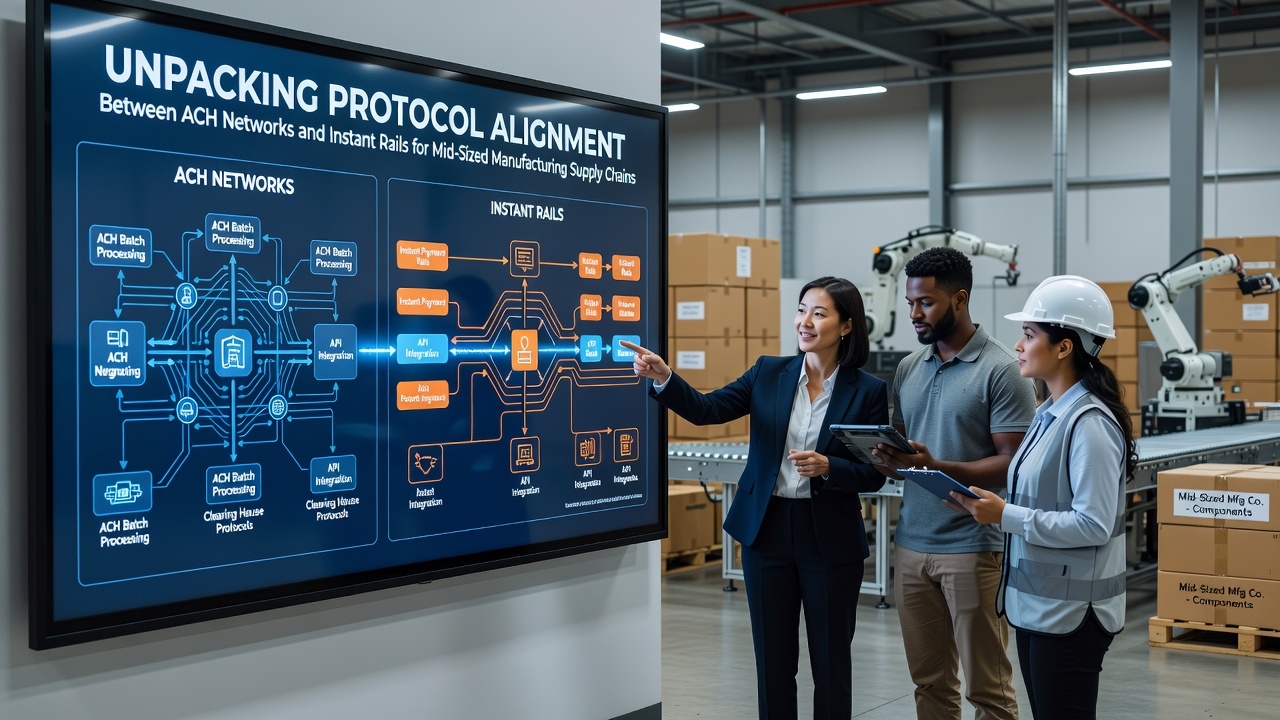
Unpacking Protocol Alignment Between ACH Networks and Instant Rails for Mid-Sized Manufacturing Supply Chains
Manufacturing supply chains at the mid-sized level depend on steady payment flows between producers, component suppliers, and logistics partners, and protocol alignment between established ACH networks and newer instant payment rails has become a focal point for operational efficiency. ACH systems handle batch settlements that typically clear within one to three business days, whereas instant rails such as the RTP network and FedNow service enable funds movement in seconds. Observers note that companies balancing these two approaches gain flexibility when managing payables cycles that stretch across multiple tiers of vendors.
Core Mechanics of ACH and Instant Systems
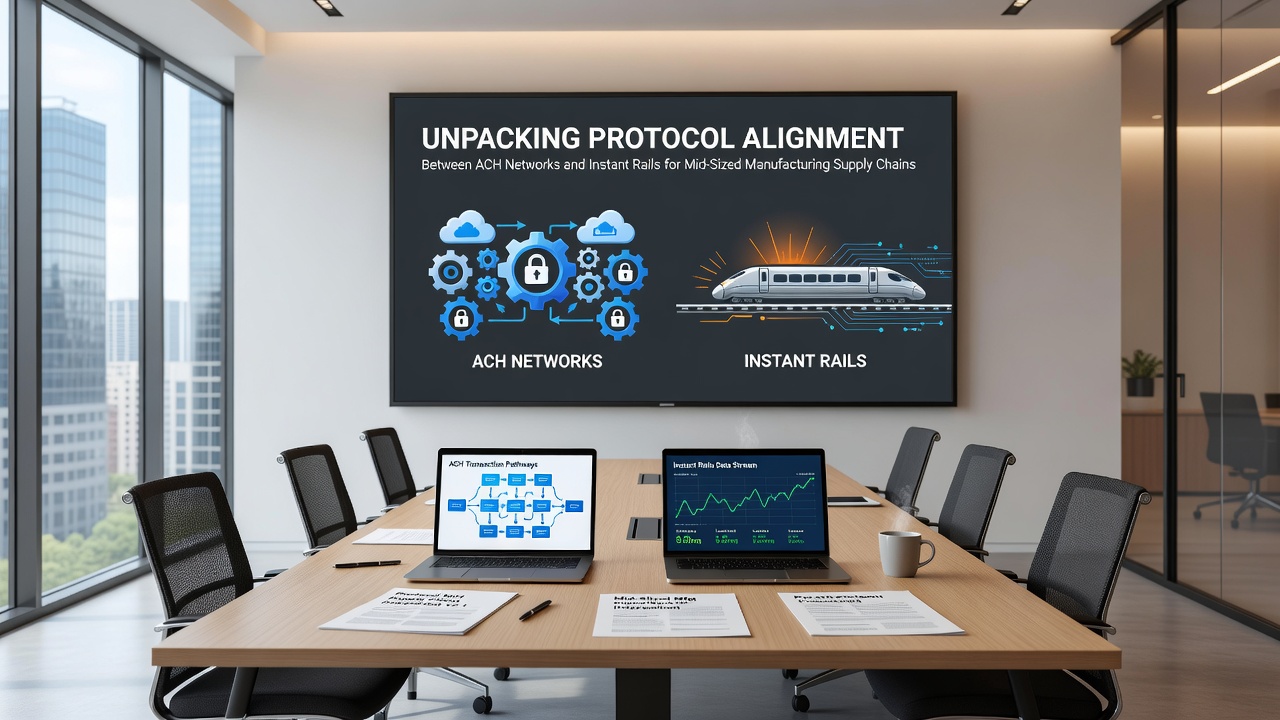
ACH operates through a series of clearing windows managed by operators including the Federal Reserve and The Clearing House, with transactions grouped for net settlement at set intervals throughout the day. In contrast, instant rails process each payment individually and confirm finality immediately, reducing the window for discrepancies that can arise during multi-day holds. Data from the Federal Reserve indicates that FedNow volume reached several million transactions per month by early 2025, while RTP continues to expand among banks serving commercial clients. Those who have studied these networks point out that protocol differences in message formats, settlement finality, and exception handling create integration layers that mid-sized manufacturers must address when routing supplier payments.
Supply Chain Payment Patterns in Manufacturing
Mid-sized manufacturers often schedule ACH disbursements for recurring supplier invoices on weekly or bi-weekly cycles to match production runs and inventory replenishment. Instant rails enter the picture when expedited payments become necessary to secure rush orders or resolve shortfalls that threaten assembly line continuity. Research indicates that firms using both methods report fewer instances of delayed shipments compared with single-rail operations, because they can shift urgent transfers without disrupting the larger batch schedule. Payment timing also influences inventory carrying costs, as faster settlement allows suppliers to release goods sooner rather than holding stock until funds clear.
Protocol Alignment Considerations
Alignment requires mapping ACH file structures such as NACHA formats to ISO 20022 messages used by instant rails, a step that banks and payment processors facilitate through middleware. Exception handling differs as well: ACH returns can occur up to sixty days later for certain reasons, while instant payments generally limit returns to a much shorter window measured in hours. Companies that have implemented dual-rail systems therefore maintain separate reconciliation procedures and audit trails for each rail. According to industry reports, the added complexity appears most often in accounts payable teams that must verify both batch totals and real-time confirmations within the same enterprise resource planning system.
Developments Observed Through Mid-2026
By June 2026 several regional banks serving manufacturing corridors in the Midwest and Southeast had rolled out enhanced APIs that let corporate clients toggle between ACH and instant rails based on supplier preferences stored in master vendor files. These updates coincided with expanded participation in instant networks by community banks that traditionally cleared only through ACH. Observers tracking adoption note that manufacturers with annual revenues between fifty and five hundred million dollars represent a growing segment of new instant-rail users, particularly when sourcing from smaller suppliers that benefit from same-day funds. A Federal Reserve analysis released that month highlighted continued growth in commercial use cases, including supply chain disbursements.
Operational Impacts on Inventory and Vendor Relations
Payment speed directly affects supplier willingness to extend credit terms or prioritize orders during material shortages. Manufacturers that offer instant options alongside standard ACH schedules have documented higher rates of on-time delivery from vendors who previously required advance payment. At the same time, batch ACH remains cost-effective for high-volume, low-urgency payments, keeping overall transaction fees lower across the payables ledger. Those managing these systems emphasize the need for clear internal policies that determine which invoices qualify for instant settlement, preventing unnecessary premium charges while still protecting production timelines.
Technical and Compliance Layers
Security protocols for both rails rely on encryption and multi-factor authentication, yet the real-time nature of instant payments introduces additional monitoring requirements for fraud patterns that evolve within minutes rather than days. Regulatory expectations around sanctions screening and beneficial ownership verification apply equally, though the compressed timeline for instant transfers demands that compliance checks occur before payment initiation rather than during settlement. Mid-sized manufacturers typically rely on their banking partners to handle these checks, yet internal teams must still ensure vendor data remains current to avoid blocks at the moment of transfer.
Conclusion
Protocol alignment between ACH networks and instant rails continues to evolve as more financial institutions expand access and refine integration tools for commercial clients. Mid-sized manufacturing supply chains benefit when payment systems accommodate both batch efficiency and real-time urgency, provided organizations establish clear routing rules and maintain robust reconciliation processes. Ongoing infrastructure updates through 2026 suggest further convergence in message standards and exception handling that could simplify operations for companies managing complex vendor networks.