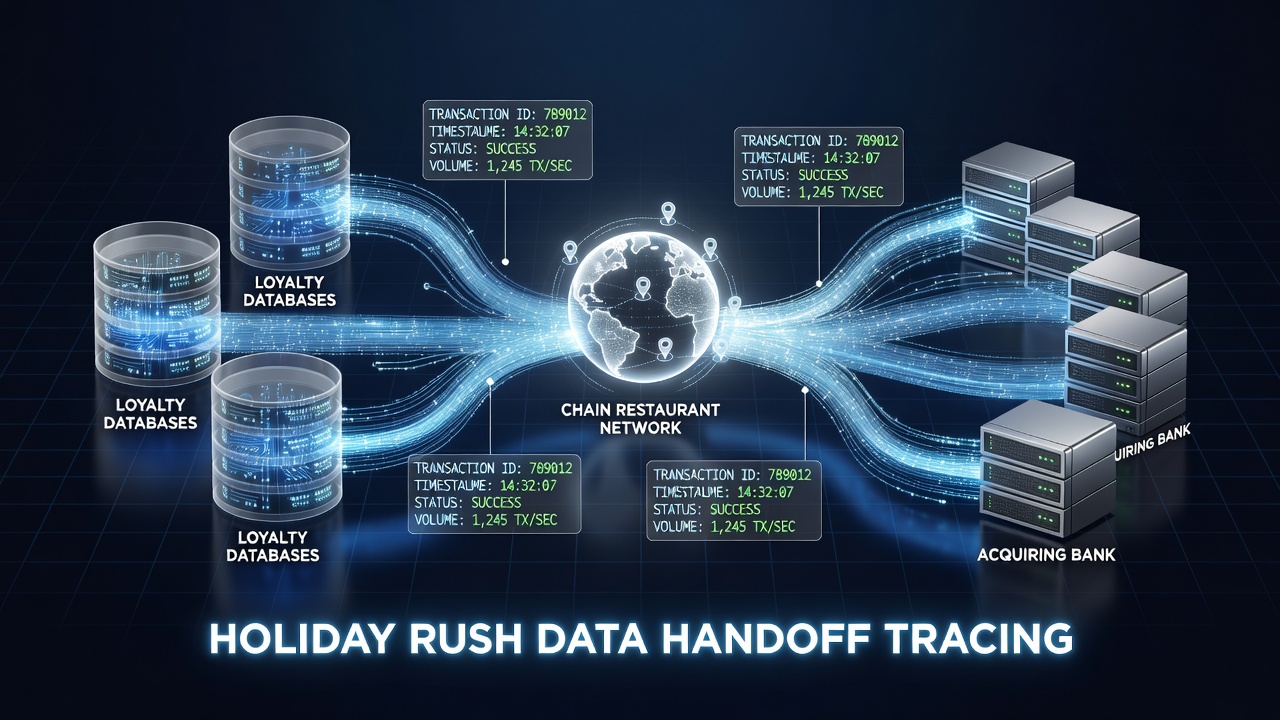
Tracing Data Handoff Sequences Between Loyalty Databases and Acquiring Banks Across Chain Restaurant Networks During Holiday Rushes
Chain restaurant networks process millions of loyalty-linked transactions each holiday season, and the sequences that move data between point-of-sale systems, loyalty databases, and acquiring banks follow defined technical paths that researchers have mapped in detail. The process begins when a customer presents a loyalty-enabled payment card or mobile wallet at the terminal, after which the point-of-sale device generates a request that travels first to the loyalty database for reward balance verification and points accrual calculations, then proceeds to the acquiring bank for authorization and settlement instructions.
Core Components of the Data Sequence
Each step relies on standardized message formats such as ISO 8583 for financial data and proprietary API calls for loyalty attributes, while the handoff between these systems occurs through encrypted channels that maintain token references rather than raw card numbers. Observers note that the loyalty database typically responds within 200 to 400 milliseconds during normal periods, after which the enriched transaction record moves to the acquirer with appended reward identifiers attached. Data indicates that chain operators maintain separate middleware layers to orchestrate these exchanges, ensuring that loyalty attributes do not delay the core authorization request sent onward to the bank.
During holiday rushes, transaction volumes can rise between 35 and 60 percent compared with baseline weeks according to payment industry reports, and the same middleware must queue and prioritize messages without dropping loyalty updates. Researchers have documented how acquirers receive the initial authorization request in parallel with a secondary loyalty sync that completes after the payment clears, which prevents bottlenecks at the terminal level while still updating customer profiles in near real time.
Technical Routing and Latency Patterns
Routing tables within the restaurant network direct traffic based on merchant category codes and loyalty program identifiers, so a single swipe can trigger multiple simultaneous calls that converge at the acquiring bank endpoint. The bank then validates funds availability and returns an approval code that travels back through the same path, allowing the loyalty database to finalize points posting only after confirmation arrives. Studies of peak-period logs show that average end-to-end latency increases from 1.2 seconds to 2.8 seconds when daily volumes exceed 150 percent of normal capacity, yet the sequence itself remains unchanged because retry logic and connection pooling absorb the extra load.
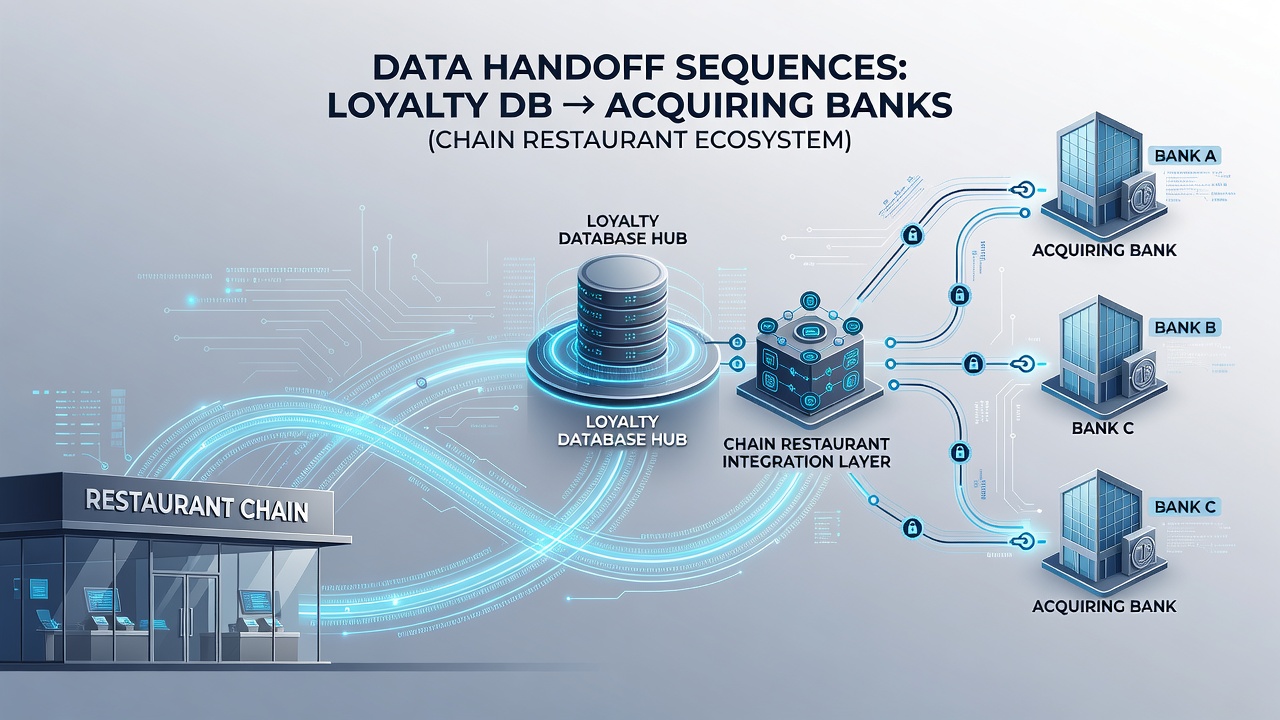
Acquiring banks apply velocity checks and fraud rules after receiving the loyalty-enriched payload, which means any mismatch between the token presented at the terminal and the record stored in the loyalty database can trigger a decline even when funds exist. Chain operators therefore run reconciliation jobs every four hours during December to align these records and reduce false declines that would otherwise appear in holiday sales data.
Geographic and Seasonal Variations
Networks operating across multiple regions adapt their routing to account for time-zone differences in holiday peaks, with North American chains often experiencing the heaviest load between Thanksgiving and New Year while European operators see similar spikes around Christmas and Boxing Day. Figures from the Federal Reserve reveal that card-not-present loyalty redemptions within restaurant apps rise sharply during these windows, requiring additional handoff steps that route mobile-originated requests through cloud-based loyalty engines before they reach the acquirer. In Canada, comparable patterns appear in Bank of Canada payment statistics, where quick-service restaurant volumes drive measurable increases in loyalty database queries that precede bank authorization messages.
One documented case involved a national burger chain that added a dedicated loyalty queue during the 2025 holiday period, resulting in a 22 percent reduction in combined processing time even as overall transaction counts climbed. The adjustment kept the core sequence intact while allowing the loyalty database to handle asynchronous updates that no longer competed directly with time-sensitive bank calls.
Security and Compliance Layers
Encryption protocols applied at each hop protect both payment credentials and loyalty identifiers, and acquiring banks require PCI-compliant tokenization before any data leaves the restaurant network. Regulatory guidance from the European Central Bank emphasizes that loyalty attributes must travel separately from primary account numbers, which reinforces the parallel-path design already used by most large operators. Research published by the University of Toronto Payment Systems Lab confirms that token rotation schedules aligned with holiday volume forecasts reduce exposure windows without altering the fundamental handoff order between loyalty systems and banks.
Conclusion
The sequences that connect loyalty databases to acquiring banks in chain restaurant environments remain consistent across high-volume periods, yet the infrastructure supporting those sequences scales through queuing, parallel routing, and periodic reconciliation. Data collected during successive holiday seasons demonstrates that the addition of dedicated loyalty pathways and region-specific timing adjustments allows networks to absorb volume surges while preserving the required order of verification, authorization, and reward updates. Continued monitoring of these flows provides operators and banks with measurable benchmarks for maintaining performance as transaction patterns evolve.