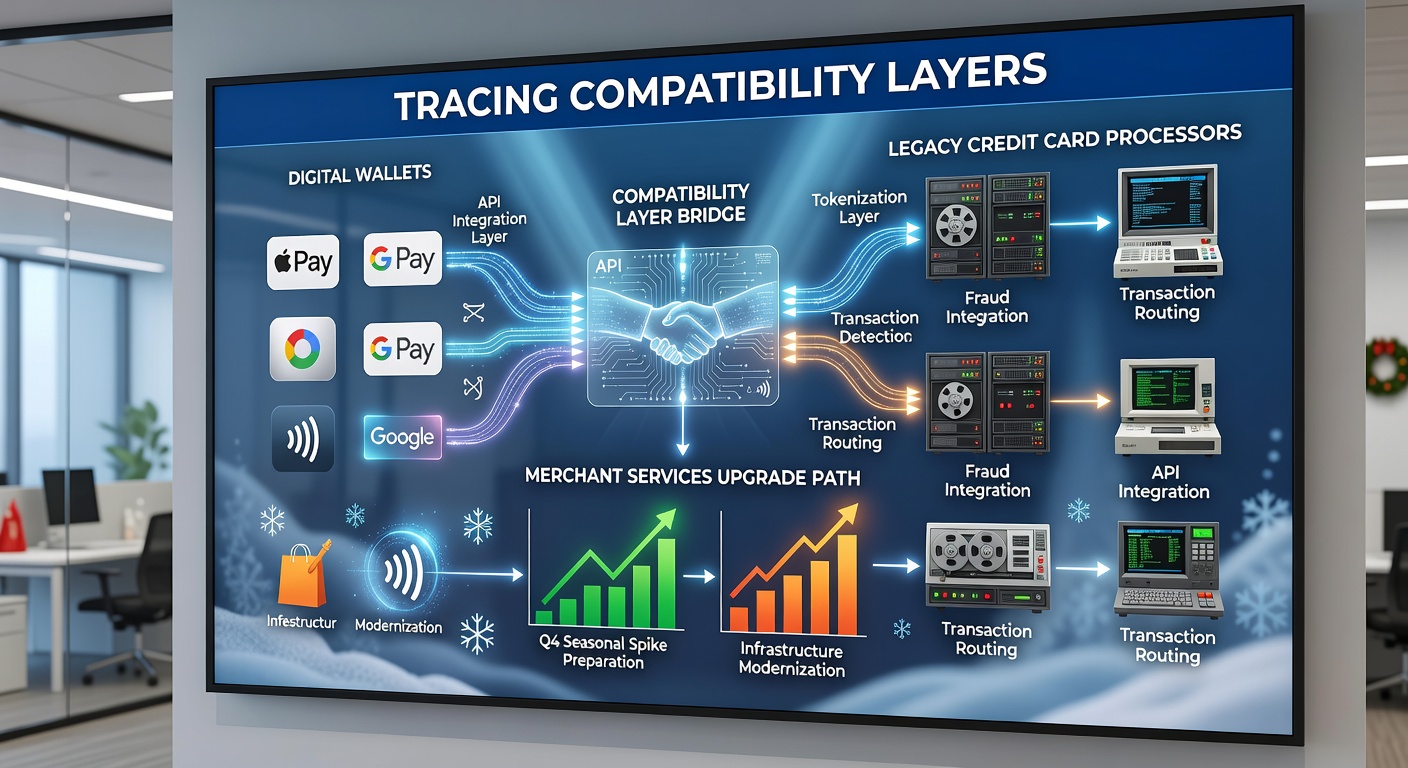
Tracing Compatibility Layers Between Digital Wallets and Legacy Credit Card Processors During Merchant Services Upgrades in Seasonal Retail Spikes
Compatibility layers serve as middleware interfaces that translate tokenized data from digital wallets into formats accepted by older credit card processors built on protocols such as ISO 8583, and these layers become critical when merchants upgrade their services ahead of high-volume periods like holiday shopping seasons. Retailers often face transaction surges that test the stability of these bridges, where digital wallets generate dynamic tokens through NFC or QR channels while legacy systems expect static card details in fixed message structures.
Core Technical Components in Compatibility Mapping
Digital wallets rely on token service providers that replace primary account numbers with limited-use tokens, whereas legacy processors authenticate via magnetic stripe data equivalents or early EMV chip exchanges. Observers note that compatibility layers must perform real-time detokenization requests back to the issuer networks while preserving message integrity across both ecosystems. In practice this involves API gateways that map EMVCo specifications to older authorization request formats, and data shows these mappings reduce rejection rates when properly configured before peak demand hits.
Merchants upgrading their point-of-sale infrastructure during seasonal preparation windows encounter specific friction points when wallet transactions must route through existing acquirer connections that predate contactless standards. Researchers have documented cases where middleware components buffer token validation calls and convert them into batch-compatible authorization packets, allowing uninterrupted processing even as volume multiplies. Those who've studied these upgrades report that synchronization between wallet SDKs and processor endpoints often requires custom field mapping for cryptogram data that legacy systems were never designed to handle natively.
Seasonal Volume Pressures and Upgrade Timelines
Seasonal retail spikes place unique demands on these compatibility mechanisms because transaction throughput can increase by factors documented in industry monitoring reports, and any mismatch in layer performance leads to authorization delays or declines. In June 2026, payment infrastructure analyses indicated that many mid-sized retailers initiated processor upgrades six months ahead of expected holiday loads precisely to test wallet integration paths under simulated high-traffic conditions. These preparations involve stress-testing the translation layers for latency introduced during token resolution steps, and figures from network operators reveal that unoptimized layers add measurable milliseconds per transaction when wallet adoption rates climb.
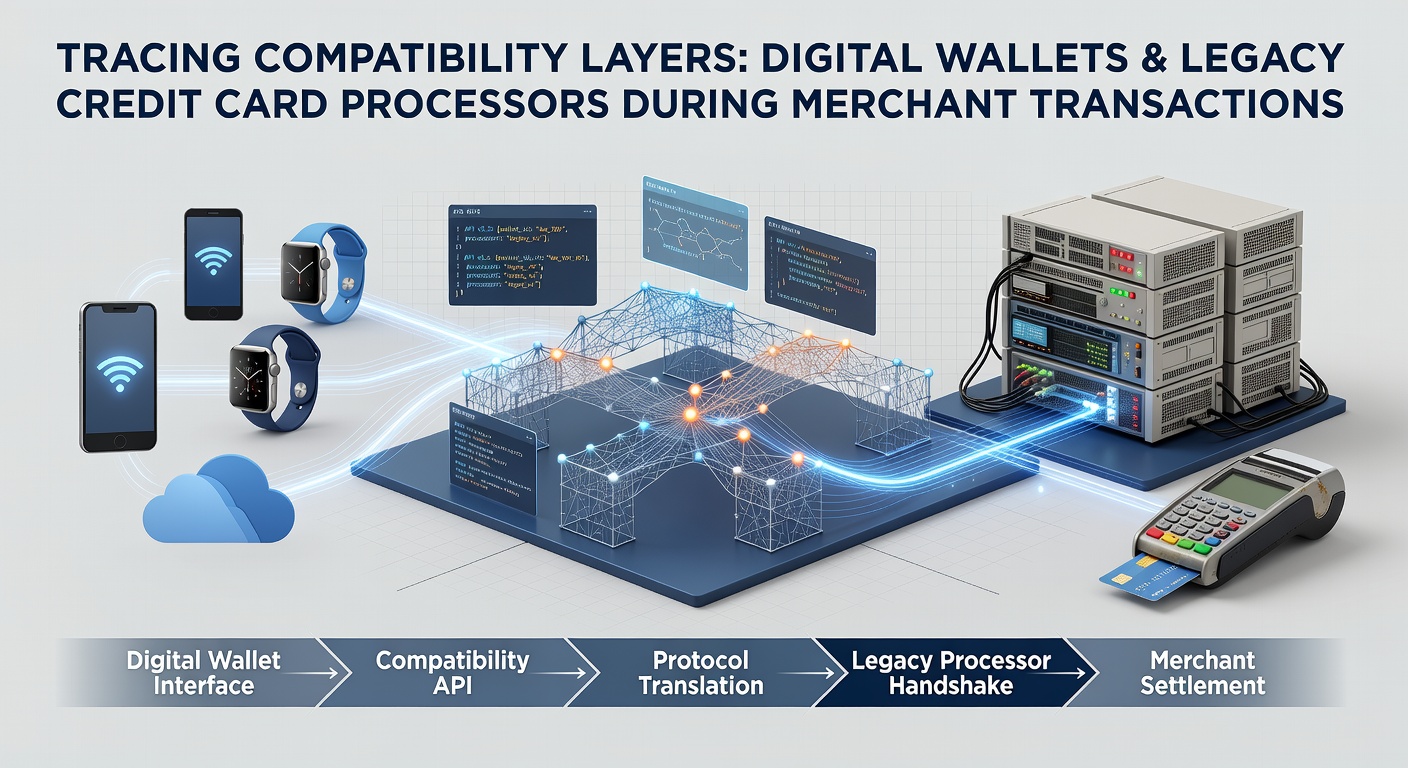
One study revealed that retailers who mapped wallet token flows to legacy authorization codes before seasonal ramps experienced fewer settlement discrepancies than those who deferred testing. Compatibility layers must also handle fallback scenarios where a wallet transaction reverts to card-on-file processing, and this requires preserving original PAN references without exposing them in transit. Experts have observed that such dual-path logic becomes essential during flash sales or promotional events when both wallet and traditional card volumes peak simultaneously.
Security Protocols and Data Exchange Patterns
Security considerations drive much of the layer design because tokenization standards from EMVCo must align with PCI DSS requirements still enforced on legacy processor connections. According to the PCI Security Standards Council, maintaining end-to-end encryption across these translation points prevents exposure of sensitive data during the conversion process. Compatibility layers therefore incorporate cryptographic key exchanges that satisfy both modern wallet requirements and older processor certificate validations, and this dual compliance adds another dimension to upgrade projects timed for seasonal readiness.
Payment orchestration platforms sometimes incorporate these layers as modular components, enabling merchants to route wallet traffic through updated endpoints while legacy card traffic continues on established channels. Data from regional payment associations indicates that such hybrid routing proves effective when seasonal demand tests system capacity across multiple geographies. Observers note that monitoring tools track success rates of token-to-authorization conversions in real time, allowing operators to adjust buffer sizes or retry logic before volumes overwhelm the infrastructure.
Case Examples from Retail Networks
There's this case where experts found that a national retail chain completed processor upgrades in spring 2026 and subsequently handled elevated wallet transaction shares during summer clearance events without service interruptions. The compatibility layer they deployed converted Apple Pay and Google Pay cryptograms into processor-native messages while logging each translation for reconciliation purposes. Similar patterns appear in supply networks serving seasonal goods, where inventory-linked payment systems must maintain accuracy even as order volumes spike.
Another documented instance involved independent merchants using cloud-based gateways that layered wallet support atop existing dial-up processor links, and these configurations demonstrated reliable performance once initial certificate mismatches were resolved. Research indicates that pre-spike testing cycles focused on edge cases such as declined tokens or partial authorizations help surface hidden incompatibilities before they affect live sales.
Conclusion
Compatibility layers continue to evolve as digital wallet adoption grows alongside gradual modernization of legacy credit card infrastructure. Seasonal retail spikes highlight both the strengths and limitations of current translation mechanisms, prompting merchants to schedule targeted upgrades that address token mapping, security alignment, and throughput capacity. Ongoing monitoring by network operators and standards bodies provides data that informs future refinements to these bridging technologies.