Tokenization's Frontline Defense: Replacing Card Data to Thwart Payment Fraudsters
The Escalating Threat of Payment Fraud
Payment fraud surges year after year, with global losses topping $40 billion in 2024 according to figures from Nilson Report, and experts predict even steeper climbs as digital transactions explode; thieves target card data relentlessly, snatching primary account numbers (PANs) through breaches, skimmers, and phishing schemes that leave merchants and consumers exposed. But here's the thing: tokenization steps in as a frontline shield, swapping out real card details for stand-in values that look authentic to payment systems yet prove worthless to crooks if intercepted. Observers note how this swap drastically cuts the attack surface, since tokens map back to actual data only through secure vaults controlled by issuers or processors.
And while fraudsters evolve tactics—shifting from physical skimming to sophisticated man-in-the-middle attacks—tokenization adapts seamlessly, powering contactless payments, mobile wallets, and e-commerce checkouts where sensitive info never even hits merchant servers. Data indicates that tokenized transactions slash fraud rates by up to 60% in some ecosystems, as revealed in studies by the PCI Security Standards Council, making it a go-to for businesses handling high-volume card payments.
Unpacking Tokenization: From Concept to Core Mechanism
Tokenization emerged in the early 2010s as a response to ballooning data breaches, essentially transforming a 16-digit PAN into a randomized surrogate—a token—that payment networks recognize but which carries zero value outside its designated domain; think of it like a burner phone number for your card, usable for transactions but useless for identity theft or resale on dark web markets. Researchers who dissected major breaches, such as the 2013 Target incident exposing 40 million cards, highlight how untokenized data fueled massive fraud waves, whereas tokenized setups would have neutralized stolen info on the spot.
Now, two main flavors dominate: network tokenization, orchestrated by schemes like Visa Token Service or Mastercard Digital Enablement Service, and merchant-specific tokens generated in-house or via gateways; the former provisions tokens directly from issuers for broad usability across apps and devices, while the latter suits closed-loop environments like loyalty programs. What's interesting is how standards from EMVCo ensure interoperability, so a token from Apple Pay works fluidly at a coffee shop terminal or online retailer, all without exposing the underlying PAN.
How Tokenization Neutralizes Fraudster Playbooks
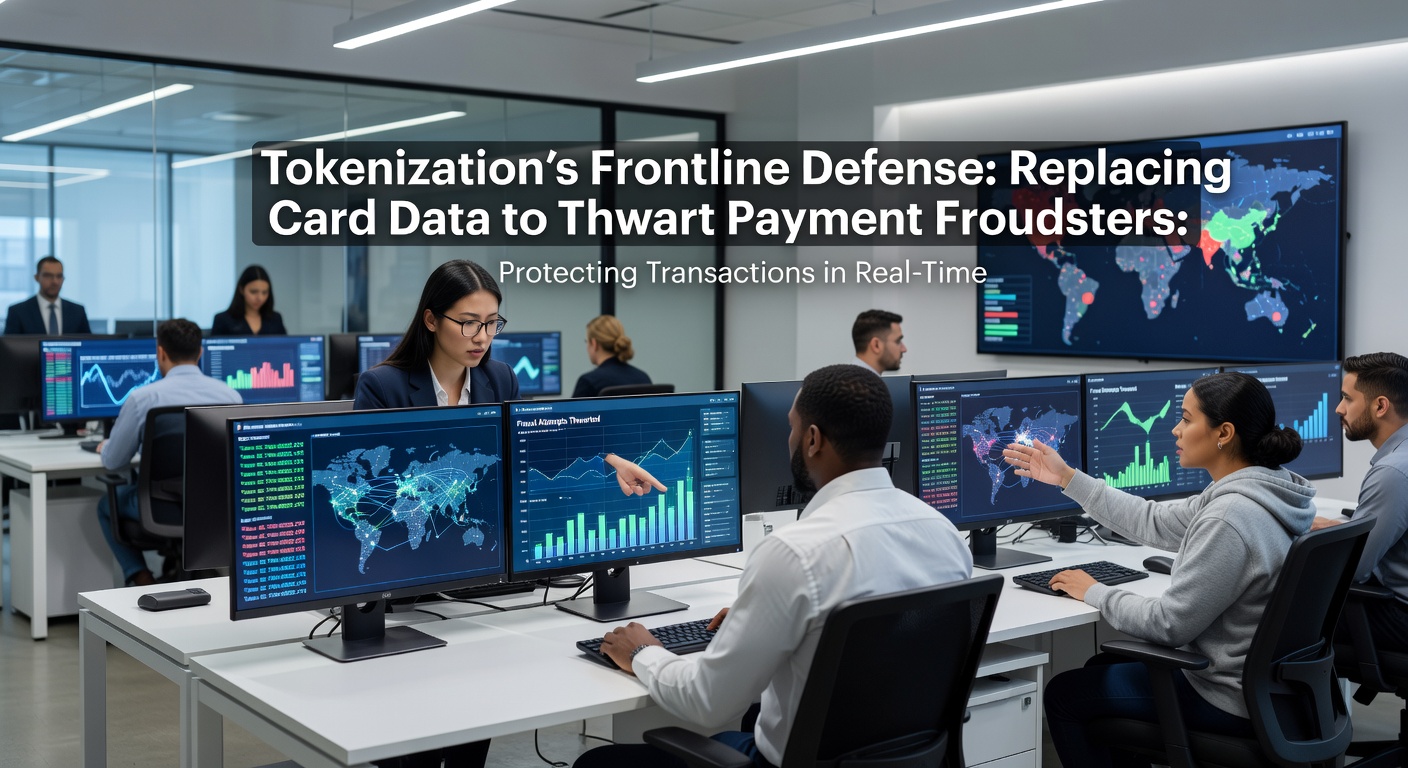
Fraudsters thrive on data interception, but tokenization disrupts that cycle from the outset; when a customer taps their phone or enters details at checkout, the system detokenizes only momentarily in a protected environment, then re-tokenizes for authorization, ensuring raw card numbers never linger in vulnerable logs or databases. Take one e-commerce platform that rolled out tokens: post-implementation, account takeover attempts dropped 70%, since stolen tokens couldn't be reversed without vault access, as case studies from industry reports confirm.
Yet it goes deeper—dynamic tokens, which rotate per transaction or session, foil replay attacks where thieves reuse captured data; static ones suffice for lower-risk scenarios, but experts who've analyzed breach forensics push dynamics for high-stakes environments like recurring billing. And in cross-border flows, where jurisdictional gaps amplify risks, tokenized data minimizes PCI DSS compliance burdens, shrinking the scope from millions of records to just token references that demand far less stringent safeguards.
Real-World Wins: Case Studies and Adoption Stats
Retail giants like Walmart and Starbucks pioneered widespread tokenization years back, integrating it with mobile apps to handle billions in tokenized volume annually; data from Visa's ecosystem shows their fraud liability shifted almost entirely to issuers, freeing merchants from chargeback headaches while keeping customer carts secure. One study revealed that U.S. merchants using Apple Pay's token framework saw counterfeit fraud plummet by 80% compared to magstripe swipes, underscoring how device-bound tokens—tied to secure elements in phones—add biometric layers that skimmers can't crack.
Across Europe, platforms like Klarna leverage tokens for buy-now-pay-later flows, where regulatory pressures from the European Banking Authority demand ironclad data protection; figures indicate tokenized BNPL transactions reduced unauthorized disputes by half since 2022. But here's where it gets interesting—in emerging markets like Brazil, PIX system's token extensions have curbed CNP fraud amid a 300% payment volume spike, as Central Bank of Brazil reports detail, proving the tech scales globally without massive overhauls.
- Starbucks app: Over 30% of U.S. payments tokenized by 2023, fraud incidents near zero.
- Uber: Network tokens across rides and deliveries, cutting data breach impacts.
- Amazon: Hybrid tokens for one-click buys, handling petabytes of safe traffic.
Those who've tracked adoption patterns notice accelerators like PSD3 in the EU, mandating token-like protections by 2026, pushing even small merchants into the fold.
Implementation Hurdles and Proven Strategies
Switching to tokenization isn't always plug-and-play, since legacy systems balk at API integrations and vault provisioning demands upfront costs; yet gateways like Stripe and Adyen offer turnkey services, provisioning tokens in milliseconds to bridge old POS to modern clouds. Observers point out that testing phases—simulating detokenization flows under load—uncover 90% of snags early, while hybrid models let businesses tokenize selectively, starting with high-risk channels like online stores.
Security pros emphasize vault diversity: don't put all eggs in one issuer basket, as multi-provider setups hedge against outages; and for April 2026, when the PCI SSC's updated Tokenization Profile 3.0 rolls out enhanced crypto standards, early adopters gain audit advantages, per preview docs. Turns out, the rubber meets the road in ongoing monitoring—tools that flag anomalous token patterns catch sophisticated mules before they cash out.
Gazing Toward April 2026: Evolving Standards and Horizons
By April 2026, tokenization standards sharpen further, with EMVCo's 3-D Secure 3.0 fully embedding dynamic tokens ecosystem-wide, slashing authentication friction while armoring against rising ATO threats; Australian regulators via the Australian Payments Network forecast a 50% uptick in tokenized mobile payments Down Under by then, driven by real-time gross settlement mandates. In Canada, Payments Canada's modernized infrastructure pushes token vaults into core rails, potentially halving fraud losses projected at CAD 2 billion annually.
Researchers predict quantum-resistant token algos debut around this timeframe, future-proofing against code-breaking advances; meanwhile, Web3 experiments layer tokens atop blockchains for crypto-fiat bridges, though scalability tests lag. It's noteworthy that global card networks aim for 80% tokenization coverage by 2026, per industry roadmaps, transforming fraud's cost-benefit equation overnight.
So as devices proliferate—wearables, EVs, IoT vending—tokenization scales to embed in every tap and swipe, rendering card data relics of a riskier era.
Conclusion
Tokenization stands firm as payment systems' bulwark, methodically replacing exploitable card data with inert proxies that neuter fraudster arsenals across channels and borders; data underscores its track record, from retail floors to digital frontiers, while 2026 milestones cement its dominance. Businesses embracing it now navigate compliance mazes effortlessly, reclaiming revenue once lost to disputes, and those watching trends know the writing's on the wall—unprotected PANs spell trouble in tomorrow's hyper-connected world. With vaults locking down the real keys, the frontline holds strong.