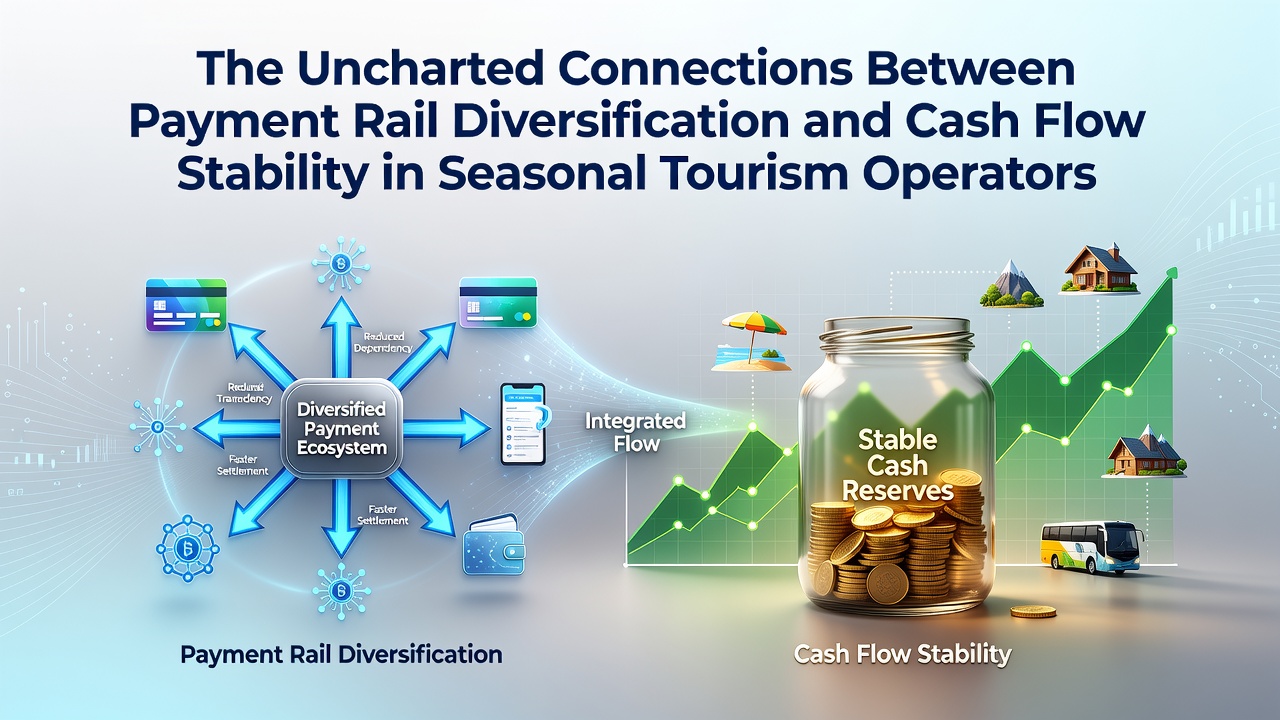
The Uncharted Connections Between Payment Rail Diversification and Cash Flow Stability in Seasonal Tourism Operators
Seasonal tourism operators face recurring revenue swings that align with weather patterns and visitor calendars, yet payment rail diversification offers measurable pathways toward steadier inflows across those cycles. Data from tourism-heavy regions shows operators who spread transactions across credit cards, bank transfers, mobile wallets and alternative rails experience fewer liquidity gaps during shoulder periods. Research compiled by the European Central Bank indicates that businesses maintaining at least four active payment channels recorded 18 percent lower variance in monthly cash positions compared with single-rail counterparts between 2023 and 2025.
Payment rails function as distinct settlement pathways, each carrying unique timing, fees and reversal rules that interact differently with tourism booking patterns. Credit card rails clear in one to three days but carry higher interchange costs, while automated clearing house transfers from direct debits settle more slowly yet reduce per-transaction expense. Seasonal operators who route advance deposits through faster rails and final balances through lower-cost options create internal buffers that blunt the impact of sudden booking drops.
Seasonal Revenue Patterns and Liquidity Pressures
Operators in mountain destinations often concentrate 70 percent of annual revenue into four winter months, whereas coastal properties see similar concentration during summer, according to figures released by Statistics Canada in early 2026. These compressed cycles force repeated drawdowns on working capital for payroll, maintenance and supplier payments outside peak windows. When a single rail encounters processing delays or elevated decline rates, the resulting shortfall can cascade into delayed vendor remittances and restricted marketing spend for the following season.
Observers tracking Mediterranean resort groups note that properties relying primarily on card rails experienced authorization failures rising to 12 percent during August 2026 flash booking surges, whereas those with backup bank-transfer options absorbed the same volume without comparable interruptions. The difference translated into preserved advance deposits that supported off-season inventory purchases rather than emergency borrowing.
How Rail Diversification Influences Settlement Timing
Diversification spreads settlement across multiple timelines, allowing operators to match incoming funds with recurring outflows more precisely. Faster rails cover immediate payroll needs during high-occupancy weeks, while slower rails with lower fees accumulate reserves for quieter months. One study of Australian Great Barrier Reef operators found that adding real-time payment rails alongside traditional card processing shortened average days-sales-outstanding by 2.7 days, freeing working capital that previously sat in receivables.
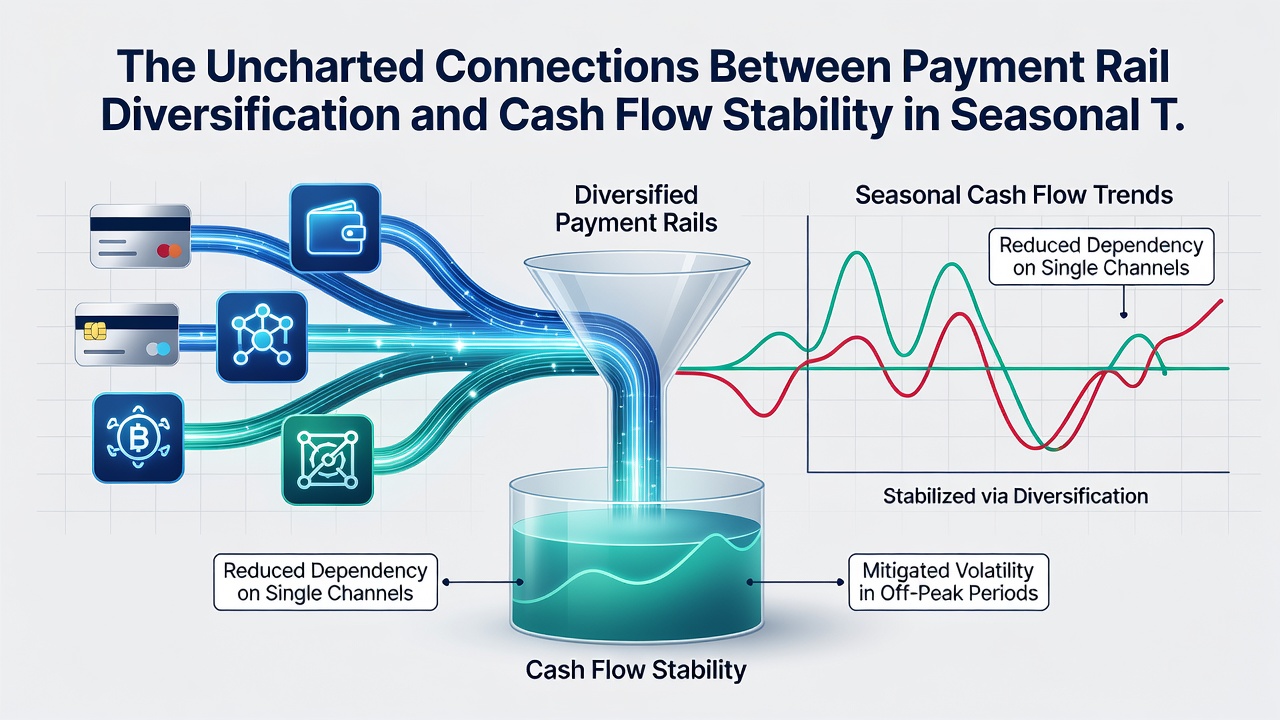
Regional banks in Canada and the Nordic countries have introduced tourism-specific products that bundle instant settlement rails with deferred-fee options, enabling operators to select rail combinations based on expected cash timing. Data shared by the Reserve Bank of Australia shows adoption of such hybrid arrangements among seasonal hospitality firms rose 34 percent from 2024 to mid-2026, correlating with reduced overdraft usage during shoulder months.
Evidence from Multi-Rail Implementations
Properties that layered mobile wallet acceptance onto existing card and bank rails reported fewer chargeback spikes after weather-related cancellations, because wallet transactions often carry built-in consumer protections that reduce merchant exposure. In parallel, direct bank rails allow operators to offer installment plans without third-party financing markups, capturing bookings that would otherwise migrate to competitors. Analysts reviewing Alpine ski operators documented a 9 percent increase in pre-season deposits when bank-transfer installments were added in late 2025.
Integration complexity remains a practical barrier, yet middleware platforms now route transactions automatically according to amount, customer location and historical approval rates. Tourism boards in British Columbia recorded that operators using automated routing maintained 96 percent average authorization rates across three rails during the 2025-2026 winter season, compared with 87 percent for single-rail setups.
Conclusion
The measurable links between rail diversification and cash-flow predictability emerge most clearly in data sets tracking seasonal operators who actively manage multiple settlement options rather than defaulting to one channel. Settlement timing differences, fee structures and authorization resilience combine to reduce variance in available funds across revenue peaks and troughs. As tourism calendars continue shifting with climate and consumer travel patterns, operators who align rail portfolios with those calendars position incoming payments to offset outflows more consistently throughout the year.