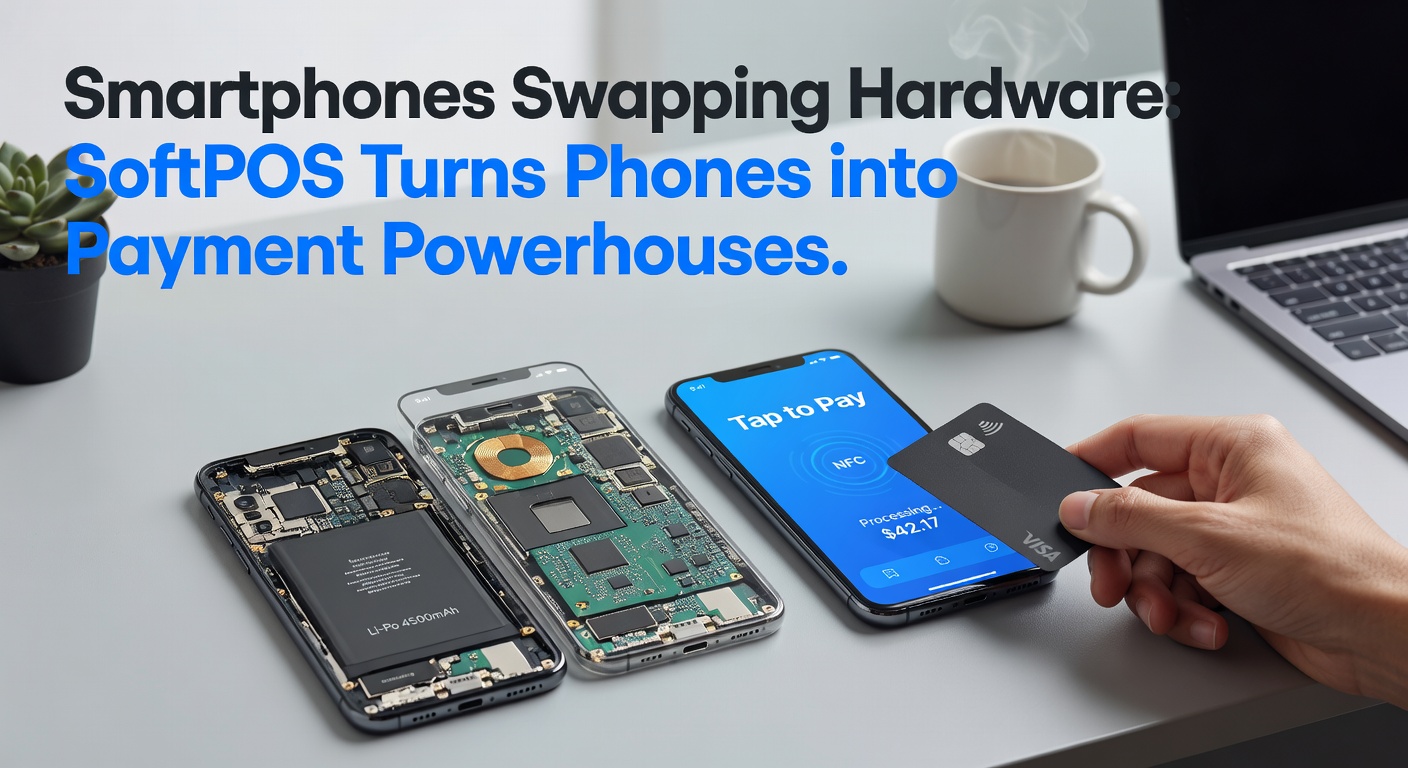
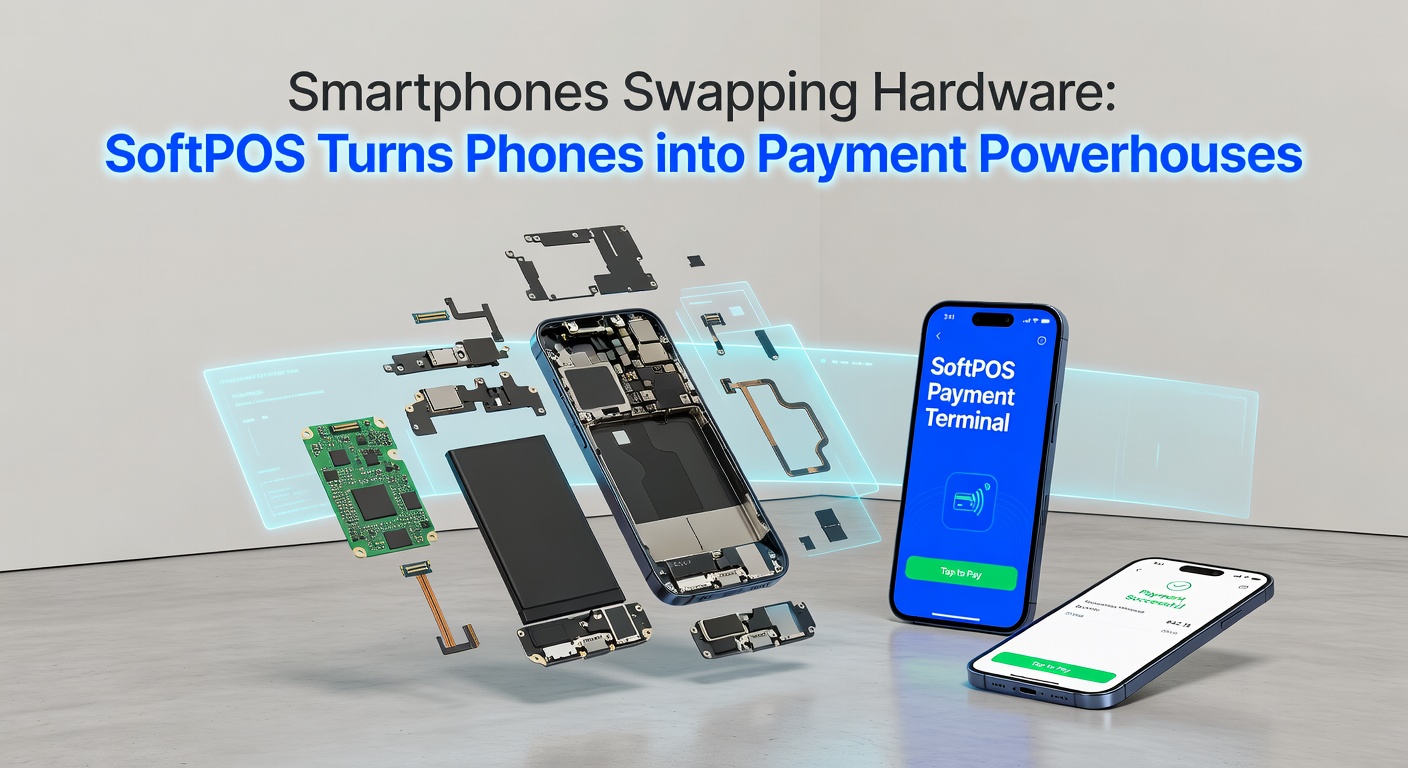
Smartphones Swapping Hardware: SoftPOS Turns Phones into Payment Powerhouses
What Exactly is SoftPOS and Why Does It Matter Now
Traditional point-of-sale systems demand dedicated hardware like card readers and terminals, yet SoftPOS flips that script by embedding payment acceptance directly into smartphones through software alone; observers note this shift empowers merchants anywhere with a compatible device, bypassing bulky equipment that once defined transactions. Data from the Federal Reserve's 2023 payments study reveals contactless payments now dominate over 50% of U.S. in-person transactions, paving the way for SoftPOS as smartphones evolve into versatile payment hubs.
Developed initially for enterprise use, SoftPOS gained traction post-2020 when pandemic restrictions forced businesses to rethink mobility; certification programs from Visa and Mastercard opened doors for everyday merchants, allowing apps to tap into a phone's NFC capabilities securely. What's interesting here is how this tech sidesteps hardware costs—researchers who've analyzed deployment costs find merchants save up to 80% compared to traditional setups, since the phone in one's pocket becomes the powerhouse.
Take small vendors at bustling markets; they pair a certified app with their Android device (iOS lags slightly due to Apple restrictions), and suddenly they're processing taps from cards or wallets like Apple Pay, all while inventory apps run in the background. Figures from industry reports indicate over 10 million SoftPOS-enabled devices worldwide by early 2025, with growth accelerating in regions hungry for affordable fintech.
How SoftPOS Works Under the Hood
At its core, SoftPOS relies on the smartphone's NFC chip to emulate a POS terminal, but security layers make it robust; tokenization replaces sensitive card data with unique codes, while end-to-end encryption ensures compliance with PCI standards, much like full-fledged terminals. Developers integrate SDKs from payment giants—Visa taps its Tap to Phone, Mastercard offers similar—certifying devices through rigorous testing that verifies hardware integrity and software isolation.
And here's where it gets clever: during a transaction, the customer's contactless card or phone initiates communication via NFC's 13.56 MHz frequency, exchanging encrypted data in milliseconds; the SoftPOS app then routes this to the acquirer for authorization, confirming funds before a digital receipt pops up. Studies from the European Central Bank's 2023 payments overview highlight how such software solutions match hardware reliability, with fraud rates under 0.1% for certified implementations.
Compatibility isn't universal though—devices need NFC hardware meeting EMV Level 3 standards, and Android 8.0 or higher typically qualifies, whereas iPhones require Workarounds via third-party readers for now. One case where experts observed rapid uptake involved Latin American street sellers; they adopted SoftPOS apps from local providers, slashing setup time from days to minutes and boosting daily volumes by 40%, according to regional fintech analyses.
But the real game-changer lies in scalability; a single app handles everything from pop-up shops to ride-share drivers collecting fares, integrating seamlessly with cloud-based inventory and loyalty programs.
Real-World Adoption and Success Stories
Merchants in emerging markets lead the charge, where infrastructure gaps make hardware impractical; in India, for instance, SoftPOS apps from Paytm and PhonePe process billions in transactions yearly, enabling rural kiosks to accept digital payments without banks nearby. Data indicates adoption surged 300% in Southeast Asia between 2022 and 2024, driven by apps like GCash in the Philippines that turn feature phones into terminals via QR hybrids.
Closer to home, U.S. food trucks and event vendors swear by it—consider one operator in Austin who ditched a $1,500 terminal for a free SoftPOS app, handling peak festival crowds with zero downtime; researchers tracking such shifts report average transaction times drop to under 3 seconds. Europe follows suit, with PSD2 regulations fostering open banking integrations that let SoftPOS apps pull real-time account verification.
Even larger players experiment; Starbucks tested SoftPOS for baristas in select stores, allowing staff phones to ring up orders during rushes, while global chains like Deliveroo equip drivers for on-the-spot tips. Turns out, for gig economy workers, this means instant payouts minus hardware hassles, and figures reveal 25% higher acceptance rates among younger demographics who favor tap-and-go.
Yet challenges persist in colder climates or high-volume spots where phone batteries drain fast under constant NFC use; savvy users pair power banks, extending shifts without interruption.
Navigating Regulations, Security, and Hurdles
Regulatory bodies worldwide scrutinize SoftPOS closely, ensuring it upholds the same safeguards as hardware; in the EU, the upcoming PSD3 framework—set for wider implementation by April 2026—will mandate stronger authentication for mobile terminals, potentially boosting SoftPOS interoperability across borders. Australia's ASIC oversees similar standards, requiring acquirers to certify software against local fraud benchmarks, while Canada's Payments Canada pushes for unified NFC protocols.
Security stands out as a pillar; PCI SSC's SoftPOS guidelines demand runtime app protection against malware, with remote key injection provisioning secure credentials post-certification. Observers who've studied breach incidents find SoftPOS no riskier than legacy systems—in fact, dynamic tokenization cuts replay attacks effectively.
That said, interoperability gaps linger; not all banks issue EMV-compliant cards, and regional schemes like Brazil's Pix blend QR with NFC, requiring hybrid apps. One study from a Nordic payments consortium revealed 15% of initial setups faced certification delays, but once cleared, uptime hits 99.9%.
Cost barriers fade too, as white-label solutions drop to under $10 monthly, making it accessible for sole proprietors who once stuck to cash.
Looking Ahead: Projections Through 2026 and Beyond
Forecasts paint a booming landscape; Juniper Research projects SoftPOS transaction volumes to hit $7 trillion globally by 2027, with April 2026 marking a tipping point as 5G enhancements cut latency further and more devices gain Level 3 certification. In the U.S., Fed projections align, estimating 40% of small merchants adopt by then, fueled by declining certification fees.
Asia-Pacific leads projections at 45% market share, where telcos bundle SoftPOS with SIM cards for instant activation; experts anticipate AI integrations for fraud detection, predicting personalized limits during transactions. And for cross-border trade, unified standards from the NFC Forum promise seamless EU-U.S. taps.
People in the field often discover that while hardware persists for high-risk venues, SoftPOS dominates casual retail; it's not rocket science—phones already handle banking, so why not payments? This convergence reshapes commerce, turning every NFC-enabled device into a potential revenue stream.
Conclusion
SoftPOS transforms smartphones from communication tools into indispensable payment engines, democratizing access for merchants worldwide through software ingenuity that rivals dedicated hardware; as adoption data climbs and regulations mature—especially with PSD3 horizons in April 2026—the landscape tilts decisively toward mobile-first transactions. Those tracking fintech evolution see the writing on the wall: hardware's reign wanes, and the phone pocket revolution rolls on, processing taps with efficiency and reach that once seemed out of bounds.