Settlement Cycle Variations and Their Impact on Payout Scheduling for Craft Fair Merchants
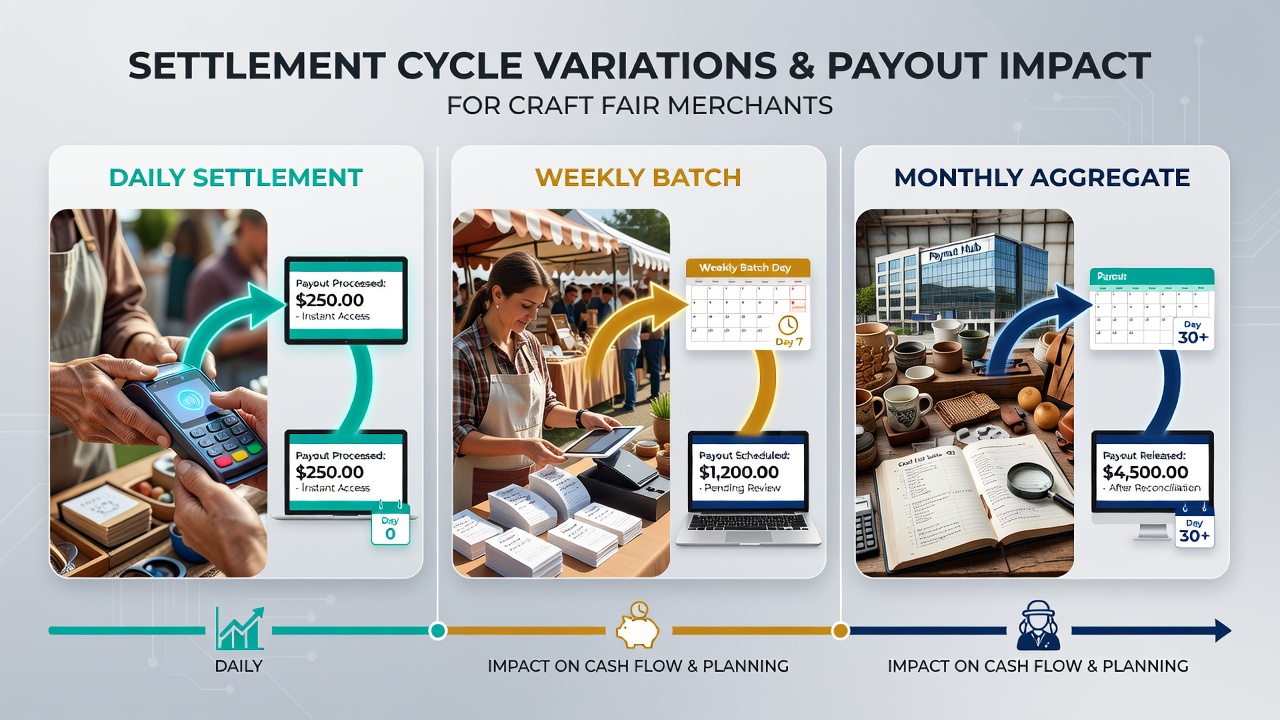
Settlement cycles determine how many days pass between a customer payment and the moment funds reach a merchant account, and these timelines vary widely depending on the processor, payment method, and jurisdiction involved. Craft fair merchants often operate in short bursts during weekend events or seasonal markets, so even a one-day shift in settlement timing can alter when they access revenue for restocking supplies or covering booth fees. Data from payment networks shows that standard cycles range from same-day T+0 arrangements in select debit networks to T+2 or T+3 windows common with credit card processors, while some emerging instant-settlement options compress the window to hours.
Core Mechanics Behind Different Settlement Timelines
Processors calculate settlement by batching transactions at the close of each business day then routing those batches through card networks or automated clearing houses, after which funds move from the acquiring bank to the merchant account. A T+1 cycle means funds arrive the next business day once the batch clears risk checks and reserve holds, whereas T+2 extends that period by an additional day to accommodate longer verification steps used by certain international card schemes. Observers note that debit transactions frequently settle faster than credit ones because they draw directly from customer accounts without the extended authorization layers applied to revolving credit lines.
Regional rules also shape these windows. In the United States the Federal Reserve's operating circulars set baseline ACH settlement at T+1 for most next-day files, yet private processors may add an extra day for fraud screening on high-risk merchant categories that include temporary pop-up vendors. European markets operating under SEPA credit transfer rules often achieve T+1 across borders, while some Asia-Pacific networks still rely on T+2 batching for cross-border card volumes. These differences become noticeable when craft fair merchants accept payments from tourists using foreign-issued cards.
How Cycle Lengths Interact with Seasonal Merchant Cash Needs
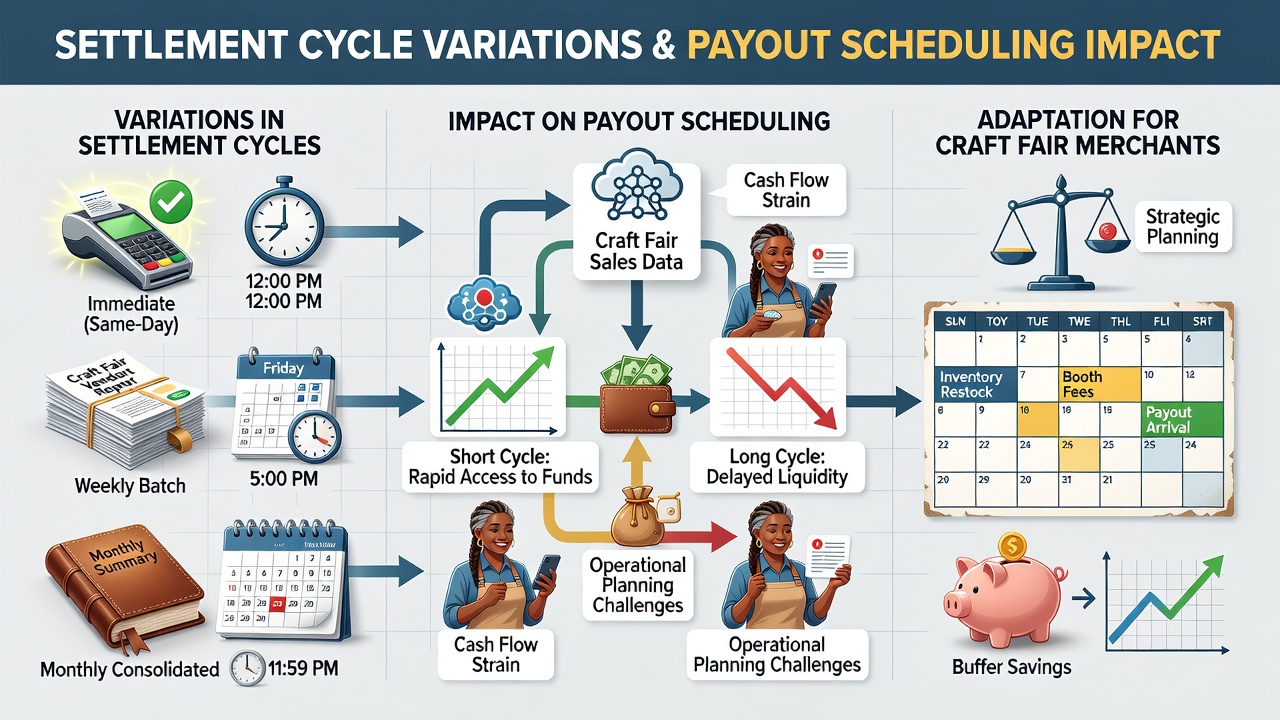
Craft fair vendors typically incur upfront costs for booth rental, inventory transport, and material restocking within days of each event, so delayed access to sales revenue forces reliance on personal reserves or short-term credit. Research from industry associations indicates that merchants operating under T+2 cycles report average cash gaps of 48 to 72 hours compared with those on T+1 arrangements, and this gap widens during multi-week festival circuits when successive events overlap. A single extended settlement cycle can therefore push a vendor past supplier payment deadlines and trigger late fees or reduced material allocations for the next market.
Payment method mix further complicates scheduling. Contactless debit transactions often clear within one day, yet credit card volumes and mobile wallet payments that route through additional token services may extend to T+2. Merchants who diversify across processors sometimes stagger batches deliberately, sending debit-heavy batches to faster-settling providers while routing credit transactions elsewhere to balance overall payout timing. Figures from processor dashboards reveal that such routing adjustments can compress average receipt time by roughly one day when executed consistently across an event season.
Processor Options and Their Settlement Trade-offs
Traditional merchant accounts tied to regional banks commonly advertise T+2 settlement but reserve the right to lengthen cycles during high-volume periods or when a merchant category code triggers extra review. In contrast, newer payment facilitators often advertise next-day funding for a small percentage fee, yet they apply rolling reserves that withhold a portion of each batch for 30 to 90 days. Craft fair merchants who switch between these models must weigh the certainty of faster payouts against the liquidity impact of reserve holds that reduce available working capital during peak market months.
Some processors now offer same-day settlement for an incremental cost, routing approved batches through real-time rails such as The Clearing House RTP network in the US or the New Payments Platform in Australia. These options reduce the cycle to hours rather than days, yet they require upfront underwriting and volume commitments that smaller seasonal vendors may struggle to meet. Data compiled by regional banking associations shows adoption of same-day rails among craft merchants remains below 15 percent, largely because the added fees erode thin margins typical of handmade goods sales.
Regulatory Adjustments Emerging in Mid-2026
By July 2026 several jurisdictions had updated consumer protection rules that indirectly affect merchant settlement windows. Updated guidelines from the Reserve Bank of Australia require clearer disclosure of reserve hold percentages, prompting some facilitators to shorten standard cycles to maintain competitive positioning. In Canada, Payments Canada implemented a voluntary faster-funds framework that lets qualifying small merchants request T+1 settlement without additional reserve requirements, and early participant data indicates modest uptake among seasonal vendors. These shifts illustrate how regulatory tweaks can compress or expand the payout calendar available to craft fair operators.
Practical Scheduling Adjustments Observed Among Vendors
Merchants who track settlement calendars across multiple processors often align their event participation with payout dates to maintain steady cash flow. One common pattern involves routing weekend sales through T+1 providers so that funds arrive before mid-week supplier orders, while using T+2 accounts for lower-volume weekdays when immediate access matters less. Software tools that aggregate settlement reports from several gateways help vendors forecast exact deposit dates and avoid overdraft situations when multiple events cluster within a single month.
Inventory planning also adapts to cycle variations. Vendors who know funds from a Friday market will not reach their account until Tuesday adjust purchase orders accordingly, placing smaller restocking buys on credit and settling supplier invoices once the batch settles. This sequencing reduces the frequency of emergency loans yet requires precise record-keeping to match each batch ID with its expected deposit date.
Conclusion
Settlement cycle length directly governs when craft fair merchants receive customer payments, and variations across processors, payment types, and regulatory regions create measurable differences in cash availability. Merchants who map these timelines against their event calendars and supplier obligations can synchronize deposits with spending needs, while those who diversify across settlement options gain flexibility during peak seasons. Ongoing regulatory updates continue to reshape available timelines, giving seasonal vendors additional levers for managing payout schedules without altering their core sales operations.