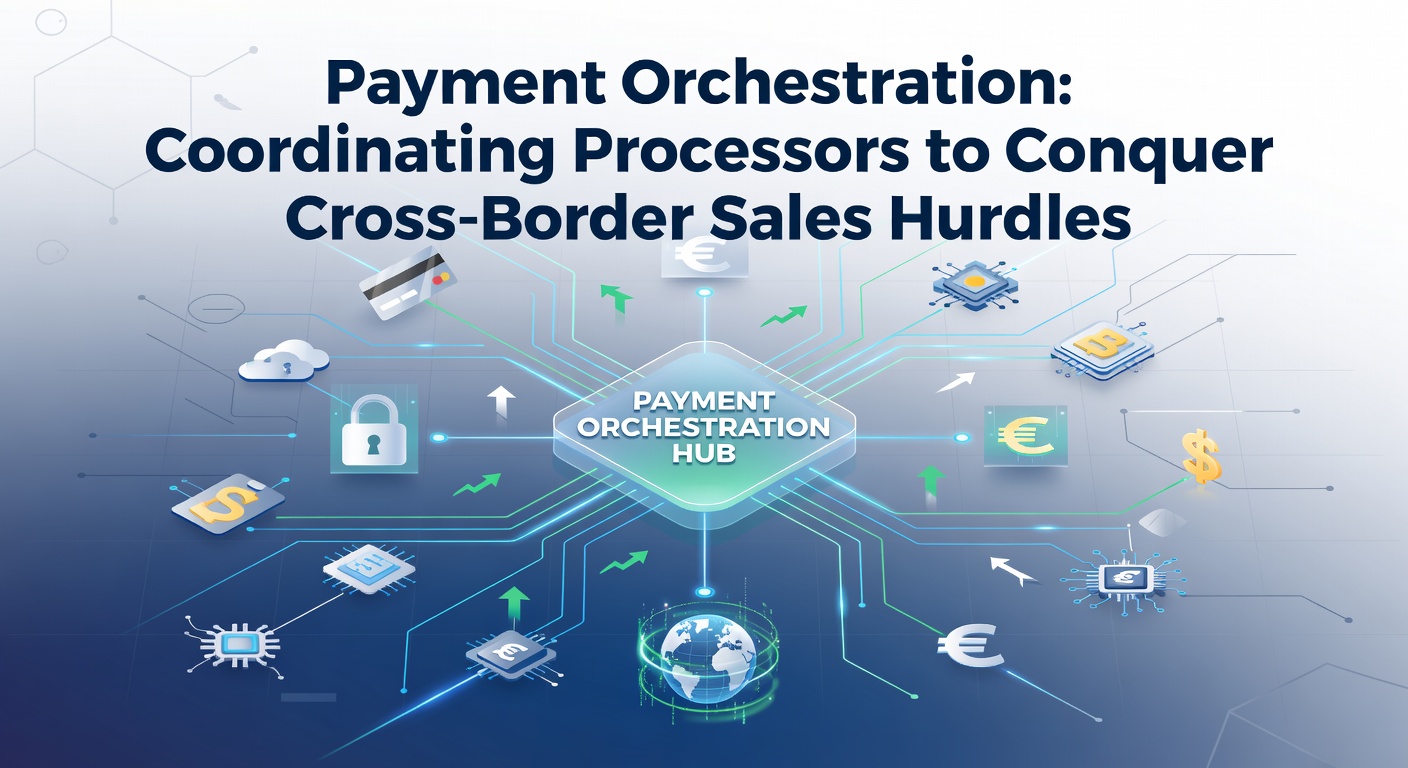
Payment Orchestration: Coordinating Processors to Conquer Cross-Border Sales Hurdles
What Payment Orchestration Means in Today's Global Marketplace
Businesses expanding into international markets often face a maze of payment processors, each with its own strengths and quirks, yet payment orchestration steps in as the smart coordinator that routes transactions dynamically to the best option available, optimizing for success rates, costs, and speed while navigating currency conversions, local regulations, and fraud risks all at once. Experts who track fintech trends note how this technology has evolved from basic gateway switching into sophisticated platforms powered by AI and real-time analytics, allowing merchants to connect dozens of processors seamlessly without rebuilding their entire tech stack.
And here's where it gets interesting: instead of sticking with one processor that might falter in certain regions—like a U.S.-based gateway struggling with Asian mobile wallets—orchestration layers on top, analyzing factors such as the buyer's location, device type, card issuer, and even historical decline patterns before deciding the optimal path. Data from industry reports reveals that unoptimized cross-border payments see approval rates hovering around 70-80%, but orchestrated setups push those figures above 90% in many cases, turning potential revenue leaks into steady income streams.
Take one e-commerce company operating in Europe and Latin America; researchers observed how it integrated orchestration to handle everything from SEPA transfers to Boleto payments, slashing cart abandonment by 25% because customers encountered fewer checkout hiccups. That's the reality for global sellers today, where orchestration isn't just a nice-to-have but a core tool for staying competitive amid rising trade volumes.
The Tough Realities of Cross-Border Payment Challenges
Cross-border sales come loaded with hurdles that trip up even seasoned merchants: varying approval rates tied to regional processors, fluctuating FX rates that eat into margins, compliance demands like PSD2 in Europe or PCI DSS globally, and fraud spikes from cross-jurisdictional scams, all while customers expect instant approvals regardless of where they're shopping from. Figures from the European Central Bank highlight how fragmented payment infrastructures across the Eurozone alone lead to billions in failed transactions annually, with non-domestic cards facing 15-20% higher decline rates due to issuer restrictions and velocity checks.
But it's not just Europe; observers point to similar issues in Asia-Pacific, where local schemes like Alipay or PromptPay dominate but international cards often get rejected outright, forcing merchants to juggle multiple integrations that drain resources and slow time-to-market. Add in settlement delays—sometimes stretching 3-7 days across borders—and high interchange fees that vary wildly by country, say 2% in Canada versus 4% in Brazil, and it's clear why 40% of global merchants report cross-border payments as their top pain point according to recent surveys.
What's significant is how these challenges compound: a declined transaction doesn't just lose the sale; it erodes trust, boosts churn, and inflates acquisition costs since re-engaging a frustrated customer costs five times more than retaining one. Those who've studied merchant forums know the stories—one retailer lost 30% of its EU revenue to repeated declines before switching tactics—underscoring why coordination across processors becomes essential.
How Payment Orchestration Platforms Actually Work
At its core, a payment orchestration platform acts like an air traffic controller for transactions, ingesting data from the merchant's checkout, evaluating dozens of processors in milliseconds via rules engines and machine learning models, then routing to the one most likely to succeed based on predefined smart logic that factors in geography, amount, payment method, and even time of day. Platforms like these—think Adyen, Stripe, or Checkout.com—expose unified APIs so developers plug in once, while the backend handles the heavy lifting of failover routing, cascading retries, and split payments across multiple gateways if needed.
Now consider the flow: a Brazilian customer buys from a U.S. store using a local card; the orchestrator first checks Visa's direct path for low fees, but if decline signals flash due to issuer blocks, it pivots instantly to a regional acquirer like PagSeguro, converting BRL to USD on the fly and applying 3D Secure where mandated. Research indicates these systems reduce latency to under 200ms per decision, crucial since 53% of mobile users abandon carts after three seconds of wait time.
Seminars from industry groups reveal how advanced setups incorporate network intelligence—pulling live data from processor APIs on uptime and approval trends—allowing dynamic blacklisting of underperformers; one study found merchants using such features cut declines by 18% within months. And for compliance? Orchestration embeds checks for things like strong customer authentication under PSD2 or Canada's EMV 3D Secure mandates, ensuring regulators stay happy without merchants lifting a finger.

Key Benefits Backed by Real-World Data
Merchants tapping orchestration report approval rates climbing 10-30% on average, per benchmarks from payments analysts, because the system plays the odds across a portfolio of processors rather than betting on a single one that might choke under volume spikes or regional blackouts. Costs drop too—optimized routing shaves 20-40% off processing fees by cherry-picking low-interchange paths, while faster settlements, often same-day in supported corridors, free up cash flow that's critical for scaling operations internationally.
Turns out fraud management gets a boost as well; orchestration layers on tokenization, velocity monitoring, and device fingerprinting across providers, with data showing a 25% dip in chargebacks for users versus siloed setups. One case from an Australian retailer expanding to Southeast Asia illustrated this perfectly: after orchestration, their revenue from Indonesia jumped 45% as local methods like OVO integrated smoothly alongside cards, dodging the usual gateway mismatches.
Scalability shines through too—platforms auto-scale for Black Friday surges or viral campaigns, distributing load to avoid bottlenecks; experts who've benchmarked this note peak throughput hitting millions of transactions daily without hiccups. That's where the rubber meets the road for high-growth brands chasing global reach without the integration nightmares.
Case Studies: Merchants Winning with Orchestration
A fashion brand out of Canada provides a prime example; facing 22% declines on U.S.-EU sales, it deployed orchestration linking Stripe, Worldpay, and local players like iDEAL, resulting in a 28% approval lift and $2.5 million in recovered revenue within the first year, as detailed in platform case studies. Similarly, a SaaS provider targeting APAC merchants orchestrated PayPal, UnionPay, and GrabPay, cutting FX losses by 15% through intelligent hedging and boosting net retention by enabling one-click repeats across borders.
But here's the thing: even non-e-commerce players benefit—think travel agencies juggling airline tickets sold in India via UPI or Mexico with Oxxo; one such firm saw settlement times shrink from five days to 24 hours, per internal metrics shared at fintech conferences. These stories repeat across sectors, from gaming platforms navigating age gates in multiple jurisdictions to subscription boxes handling churn from payment fails.
Observers tracking April 2026 trends anticipate even bigger wins as ISO 20022 standards roll out globally, standardizing data formats that supercharge orchestration's analytics; early adopters in the EU already report 12% efficiency gains from richer transaction insights.
Looking Ahead: Trends Shaping Orchestration by 2026 and Beyond
By April 2026, regulatory shifts like Australia's New Payments Platform expansions and U.S. FedNow's cross-border pilots will demand even smarter orchestration, with platforms embedding CBDC compatibility and real-time gross settlement hooks to slash frictions further. Data from the Reserve Bank of Australia projects cross-border volumes doubling to $250 trillion annually by decade's end, pushing adoption as merchants chase every edge.
AI advancements mean predictive routing will evolve, forecasting declines before they hit based on global events or issuer updates; studies forecast 95%+ approvals as standard. Embedded finance integrations—wallets in apps, BNPL splits across processors—will proliferate too, making orchestration the backbone for seamless experiences.
Yet challenges linger: data privacy under GDPR evolutions and rising cyber threats require vigilant platforms, but those investing now position themselves ahead of the curve.
Conclusion
Payment orchestration stands out as the linchpin for merchants conquering cross-border hurdles, coordinating processors intelligently to boost approvals, trim costs, and ensure compliance in a fragmented world where sales know no borders. As volumes surge and tech matures—especially with milestones like April 2026 regulatory alignments—businesses leveraging these tools consistently outperform, turning global complexity into straightforward growth. The evidence stacks up across data, cases, and trends: orchestration isn't optional anymore; it's how savvy players win the international game.