Mapping Data Flow Bottlenecks Between Hybrid Cloud Setups and Payment Processing Tools in Nonprofit Fundraising Campaigns
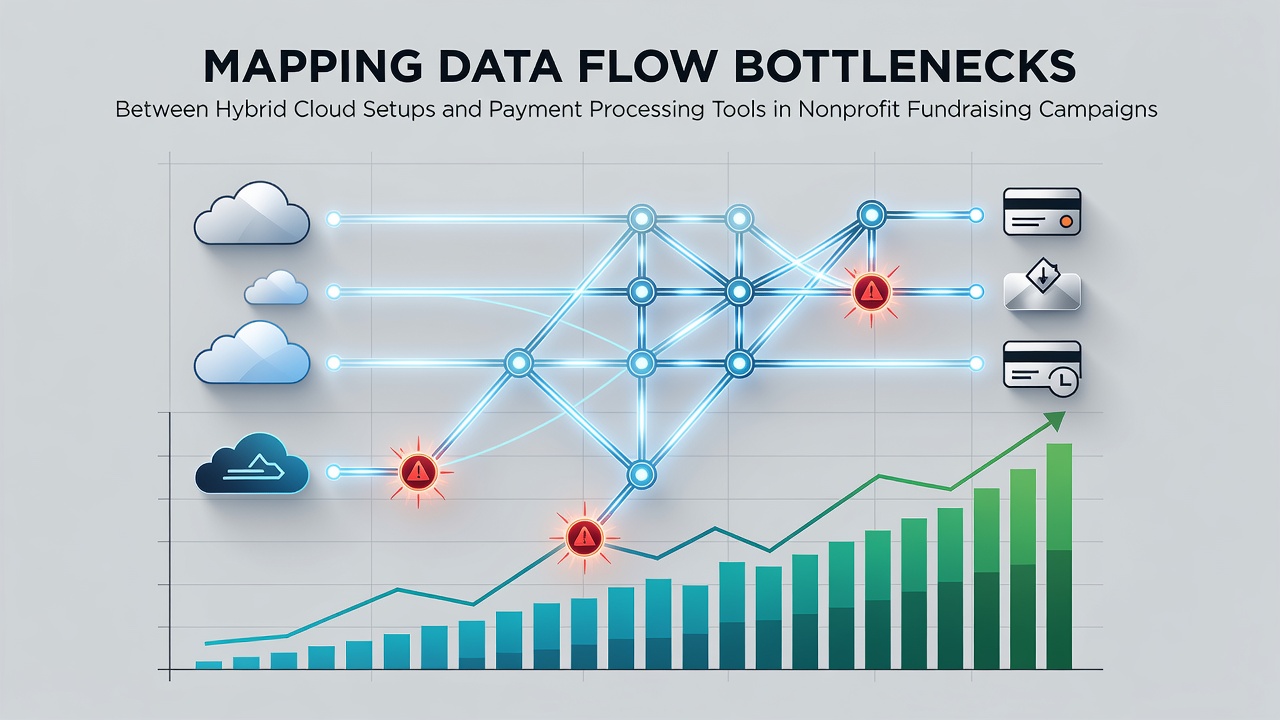
Nonprofit organizations increasingly rely on hybrid cloud architectures that blend on-premises servers with public and private cloud resources, yet data movement between these environments and external payment processing tools frequently encounters slowdowns that disrupt fundraising cycles. Observers note that donation spikes during end-of-year campaigns or emergency appeals place heavy loads on systems where latency builds at the points where legacy databases hand off transaction records to cloud-based analytics engines before routing them to processors. Researchers tracking nonprofit technology adoption report that integration layers between hybrid setups and payment gateways often create the first choke points. Data packets carrying donor details must pass through multiple authentication checks and format conversions, and when these steps occur across mixed infrastructure the handoff times extend beyond acceptable windows for real-time authorization. Studies from academic institutions focused on nonprofit operations show that organizations using older ERP modules alongside newer cloud services experience repeated retransmissions when payment APIs expect standardized JSON structures that on-site systems still deliver in older XML formats.Common Points Where Flow Slows
Data synchronization between hybrid clouds and payment processors stalls most often at three junctions. The first occurs during initial tokenization requests when sensitive card information leaves the nonprofit's secure perimeter and enters cloud-hosted payment orchestration layers. A second slowdown surfaces in reconciliation loops where cloud analytics compare processed amounts against bank settlement files that arrive through separate legacy channels. The third appears in reporting pipelines that push aggregated donor metrics back into on-premises donor relationship management platforms.
Figures from industry reports compiled in mid-2026 indicate that nonprofits handling more than fifty thousand transactions per quarter record average delays of 2.3 seconds per authorization when hybrid-to-payment connections cross multiple network zones. These delays compound during coordinated campaigns that involve multiple payment methods including credit cards, ACH transfers, and digital wallets.
Geographic and Regulatory Influences
Payment processors serving North American nonprofits must comply with PCI-DSS standards while also satisfying data residency rules that differ between Canadian provincial regulations and U.S. state laws. European nonprofits face additional constraints under GDPR that require certain donor records to remain within regional cloud zones, forcing extra routing steps when U.S.-based payment gateways are involved. Observers tracking these patterns note that organizations operating across borders spend extra cycles mapping which data subsets can travel through which cloud regions without triggering compliance flags.
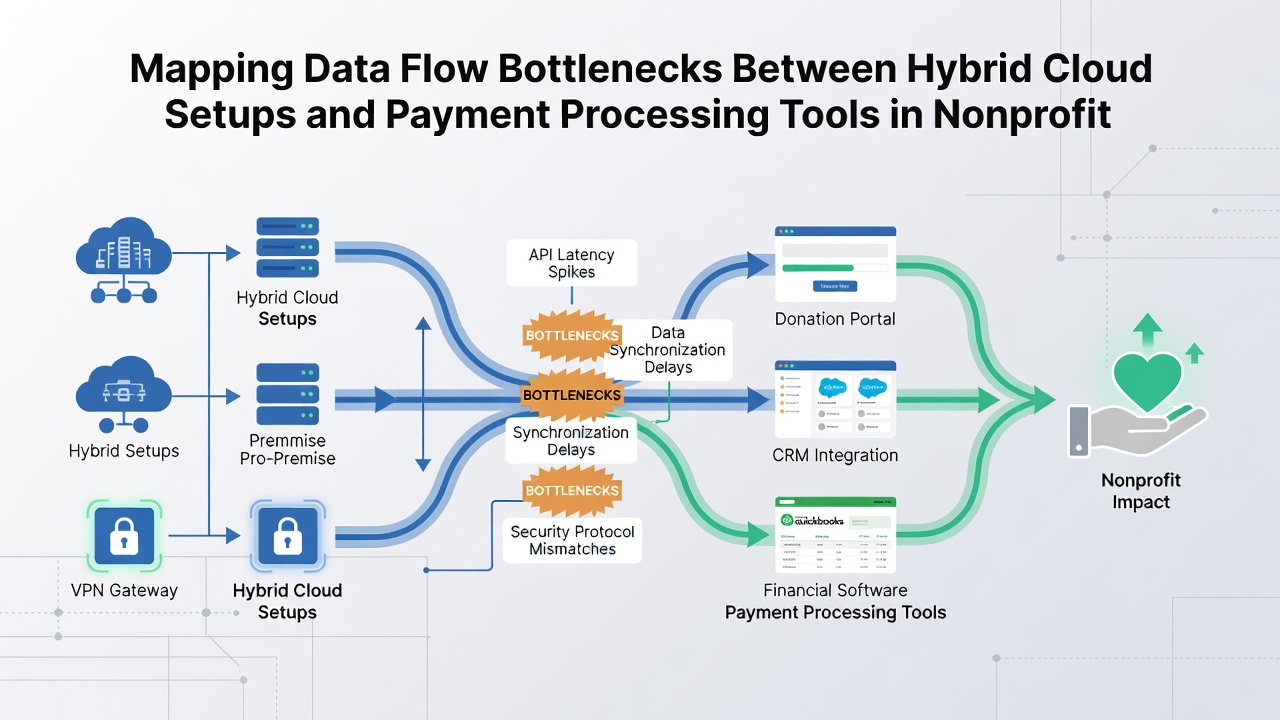 One documented case involved a Canadian charity that moved its donor database to a hybrid configuration in early 2026. Transaction logs revealed that payment confirmations from the processor arrived faster than the cloud-based matching service could update the on-premises CRM, creating duplicate entry attempts that triggered fraud alerts. The team resolved the issue by inserting a lightweight message queue at the cloud boundary rather than expanding overall compute capacity.
Tools and Methods for Identifying Bottlenecks
Technical teams map these flows using distributed tracing platforms that tag each transaction segment with timestamps as it moves from web form to cloud storage to processor endpoint. Network monitoring solutions capture packet loss at VPN tunnels connecting private cloud segments with public providers, while application performance tools isolate which API calls consume the largest share of processing time. Data collected during July 2026 campaigns showed that organizations applying these tracing methods reduced average transaction completion times by 18 percent after rerouting high-volume donation streams through dedicated payment orchestration services.
Payment orchestration layers themselves sometimes introduce new variables when they attempt to balance loads across multiple processors. When one processor experiences temporary capacity constraints during peak hours, traffic reroutes automatically, yet the hybrid cloud's session management layer may not recognize the new endpoint quickly enough, resulting in dropped callbacks that leave donor records in pending states.
Approaches That Reduce Friction
Nonprofits that standardize data schemas across their hybrid environments report fewer conversion errors when feeding information to payment tools. Some organizations implement edge computing nodes near their primary cloud provider to handle initial validation before records travel deeper into the hybrid stack. Others establish direct peering agreements with payment processors so that traffic bypasses general internet routes and travels over private links that maintain consistent latency.
According to guidance published by the Australian Charities and Not-for-profits Commission, organizations should document every data transformation step that occurs between receipt of a donation and final settlement. This documentation helps teams isolate whether bottlenecks originate in cloud orchestration scripts, processor response formats, or internal database triggers.
Conclusion
Mapping data flow bottlenecks in hybrid cloud and payment processing environments requires continuous measurement across all integration points rather than periodic audits. Nonprofits that maintain detailed transaction timelines and apply targeted tracing tools identify slowdowns before they affect donor experience during high-stakes campaigns. As payment ecosystems evolve and cloud configurations grow more layered, the organizations that treat data movement as a measurable pipeline rather than a background process maintain steadier fundraising performance throughout the year.