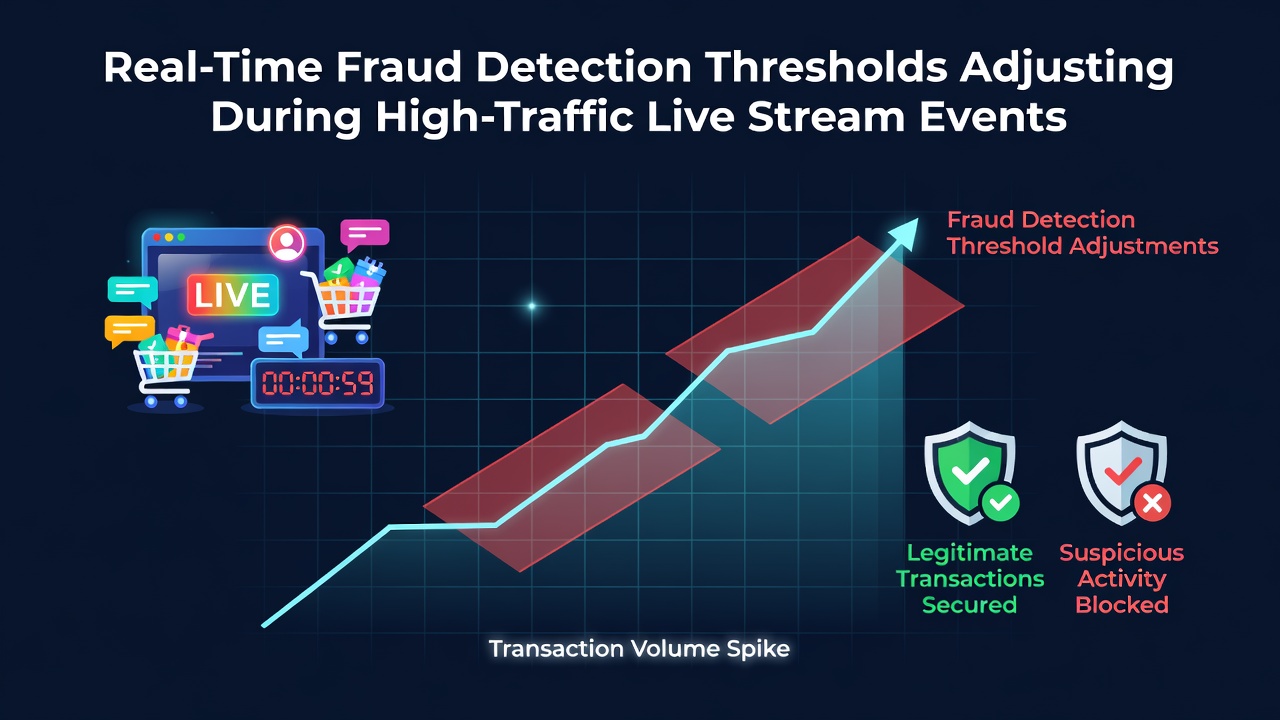
How Real-Time Fraud Detection Thresholds Adapt in Live Streaming Commerce During Peak Traffic
Live streaming commerce platforms experience sudden surges in transaction volume during promotional events, flash sales, and influencer-led broadcasts, which forces fraud detection systems to recalibrate their thresholds in real time. These adjustments rely on machine learning models that monitor velocity metrics, device signals, and behavioral patterns to balance approval speed against fraud exposure. Data from major platforms shows traffic can increase by factors of ten or more within minutes when a popular creator launches a limited-time offer.
Core Mechanisms Behind Threshold Adjustments
Systems evaluate each transaction against baseline rules that incorporate historical data from similar events, then shift parameters dynamically as volume climbs. Researchers have documented how models lower certain velocity limits temporarily while tightening others around new account creation or cross-border payment attempts. This layered approach prevents bottlenecks at checkout without exposing merchants to elevated chargeback risks.
Behavioral analytics play a central role here, since algorithms track mouse movements, session duration, and repeat viewing patterns that distinguish engaged buyers from automated scripts. During peak periods platforms often expand the acceptable range for these signals because legitimate users exhibit more variable behavior under time pressure. At the same time, device fingerprinting thresholds may become stricter to flag emulators or unusual browser configurations that appear more frequently in coordinated attacks.
Impact of High-Traffic Events on Model Behavior
High-traffic windows create distinct data distributions that training sets rarely capture in full, prompting platforms to activate event-specific model versions. These versions incorporate real-time features such as concurrent user counts and geographic clustering of orders. Evidence from payment processors indicates that authorization rates can dip temporarily before models stabilize, usually within the first fifteen minutes of a surge.
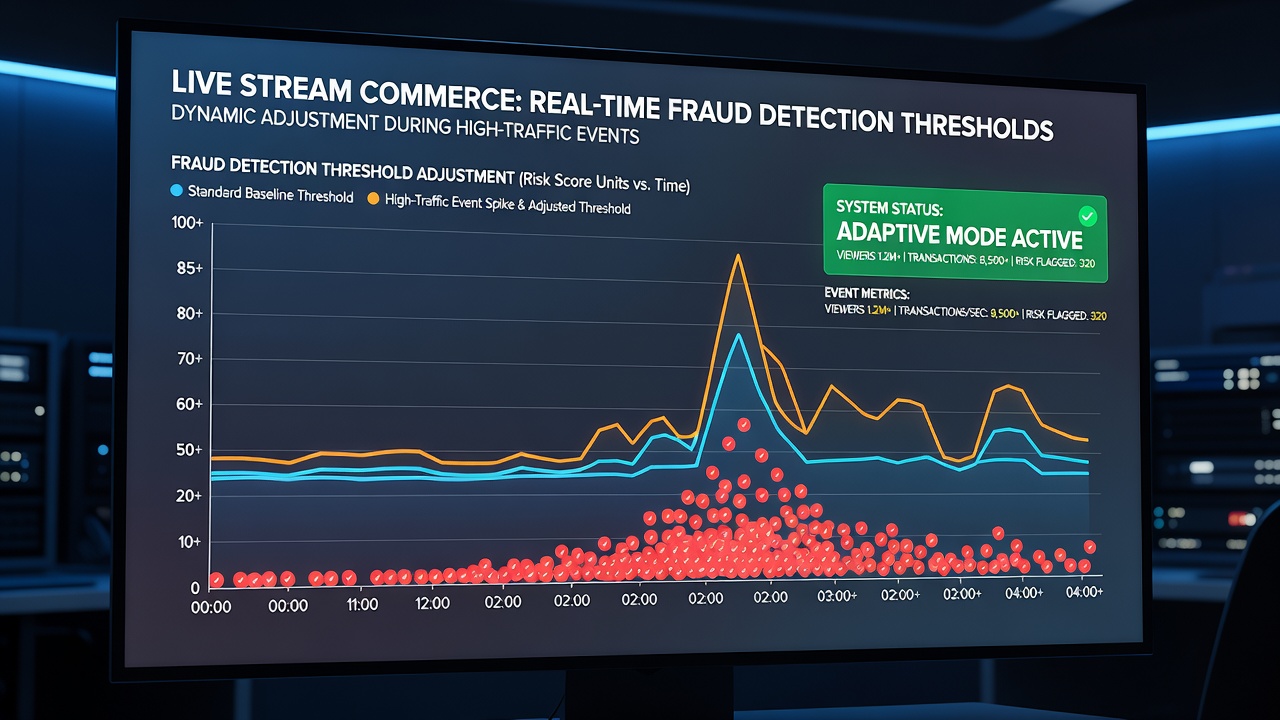
June 2026 brought several large-scale live shopping events across Asia-Pacific markets where platforms tested updated threshold logic against simultaneous campaigns. Observers noted that systems using ensemble methods maintained steadier performance than single-model setups because they weighted traffic context more heavily. Payment orchestration layers helped route transactions to processors with lower latency during these windows, indirectly supporting fraud controls by reducing timeout-induced false declines.
Regional Variations in Threshold Strategies
Platforms serving North American audiences tend to emphasize account-age signals during peaks, whereas those focused on Southeast Asian markets adjust more aggressively around mobile network changes and e-wallet velocity. A report released by Payments Canada in early 2026 highlighted how Canadian live commerce operators integrate open banking data feeds to verify funding sources faster when traffic spikes. European operators, by contrast, often reference the European Central Bank's guidelines on strong customer authentication to maintain compliance while scaling thresholds.
These regional differences stem from varying regulatory expectations and consumer payment preferences rather than arbitrary choices. Systems that pull in local data sources achieve faster convergence on new threshold values because they account for market-specific fraud patterns documented in prior events.
Technical Implementation and Monitoring
Real-time recalibration occurs through feedback loops that compare live decision outcomes against post-event chargeback data. Engineers deploy shadow models that run in parallel with production rules, allowing teams to validate threshold shifts before full activation. When anomalies appear, such as clusters of declined transactions from a single IP range, the system can revert selected parameters within seconds.
Logging infrastructure captures the rationale behind each adjustment so compliance teams can reconstruct decisions later. This audit trail becomes especially valuable when platforms operate under frameworks that require explanation of automated fraud actions to regulators or affected merchants.
Conclusion
Live streaming commerce continues to test the limits of fraud detection systems as event-driven traffic grows more unpredictable. Threshold adjustments that combine velocity controls, behavioral signals, and regional data sources enable platforms to process higher volumes while containing risk. Continued refinement of these mechanisms depends on access to diverse datasets and cross-border coordination among payment stakeholders.