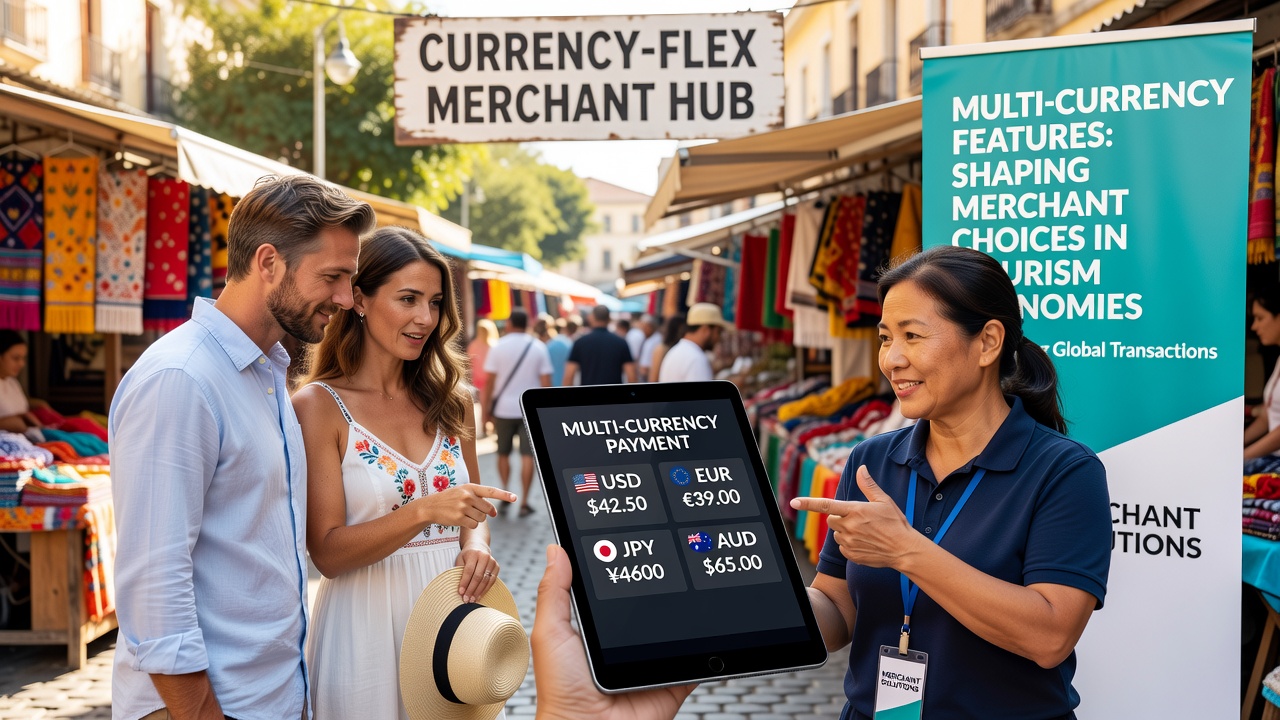
How Multi-Currency Handling Features Shape Merchant Choices in Tourism-Heavy Economies
Multi-currency handling features let merchants accept payments in foreign currencies without forcing immediate conversion, and this capability directly influences which payment providers tourism businesses select in high-traffic destinations. Economies that rely on international visitors, such as those in Southeast Asia, Southern Europe, and parts of Australia, see merchants weigh these tools when evaluating processors because they affect transaction costs and customer conversion rates. Data from the World Tourism Organization shows that international arrivals reached 1.3 billion in 2025, with many travelers preferring to pay in their home currency or a familiar one to avoid hidden fees.
Currency Options and Merchant Decision Factors
Merchants in tourism-heavy areas examine settlement currencies, real-time exchange rates, and integration ease when choosing systems, since these elements determine how much revenue stays after fees. Research from the European Central Bank indicates that businesses accepting multiple currencies report up to 15 percent higher authorization rates during peak travel periods because cardholders face fewer declines tied to foreign transaction blocks. Providers that support dynamic currency conversion alongside local currency pricing give merchants flexibility, yet those same merchants must compare compliance requirements across jurisdictions because rules differ between the EU, Australia, and emerging markets in Asia.
Observers note that cost structures often drive final selections, with fixed per-transaction charges and percentage-based foreign exchange markups varying widely among processors. In regions where tourism accounts for over 20 percent of GDP, such as parts of Thailand and Spain, merchants frequently audit provider statements for hidden spreads on currency pairs like EUR to THB or AUD to USD, since even small differences compound across thousands of daily transactions.
Regional Patterns in Provider Selection
Coastal and island economies demonstrate distinct patterns where merchants cluster around processors that offer seamless multi-currency support integrated with inventory and booking systems. Australian tourism operators, for instance, have shifted toward platforms that handle AUD alongside major currencies during the 2025-2026 summer season, aligning with visitor inflows from Asia and North America. Figures from the Australian Bureau of Statistics reveal that retail and hospitality sectors in Queensland and Western Australia processed elevated volumes of cross-border payments in the first half of 2026, prompting merchants to prioritize settlement speed in multiple currencies to maintain supplier relationships.
Meanwhile, Mediterranean destinations show merchants favoring providers that comply with both EU payment regulations and local tax reporting, since multi-currency tools must interface with VAT systems without creating reconciliation delays. One study of Spanish coastal businesses found that establishments using unified multi-currency ledgers reduced accounting errors by 22 percent compared with those relying on manual conversions, according to industry reports covering operations through August 2026.

Operational Impacts on Daily Choices
Daily operations reveal how these features affect staffing and technology investments, because merchants must train staff on currency displays and monitor rate fluctuations during high-volume periods. Businesses in Bali and Phuket have documented preferences for mobile-enabled processors that display real-time rates on customer-facing screens, reducing disputes at checkout while supporting both local IDR and common visitor currencies. This preference stems from observed patterns where clear pricing in multiple currencies correlates with higher average transaction values during festival seasons.
Supply chain considerations also enter the equation, since multi-currency settlements allow merchants to pay international suppliers directly in their preferred currency and avoid separate forex services. Data indicates that tourism merchants who consolidate these functions through a single provider experience fewer delays in restocking imported goods, particularly when dealing with perishable items or seasonal inventory that arrives from multiple countries.
Challenges That Influence Final Selections
Regulatory variations and technical compatibility remain central challenges that merchants evaluate before committing to a provider. In economies where tourism spikes create cash-flow pressures, processors that offer same-day multi-currency settlements gain preference over those with longer clearing cycles, even when base fees appear comparable. Merchants weigh these trade-offs against fraud detection tools calibrated for international card patterns, since mismatched currency handling can trigger false declines during peak arrival months.
Integration with existing point-of-sale and reservation platforms further narrows choices, because legacy systems in many tourism businesses require middleware to support newer multi-currency APIs. Those who've implemented such upgrades report that successful deployments depend on providers offering clear documentation and regional support teams familiar with local banking protocols.
Conclusion
Multi-currency handling features continue to guide merchant decisions in tourism-dependent economies by shaping cost structures, operational efficiency, and customer experience metrics. As visitor volumes stabilize after 2025 growth, providers that deliver transparent rate management alongside reliable integration maintain stronger positions among businesses that process high proportions of foreign payments. Merchants in these markets evaluate options through ongoing review of settlement performance and compliance alignment, ensuring selections support both immediate transaction needs and longer-term supplier and regulatory requirements.