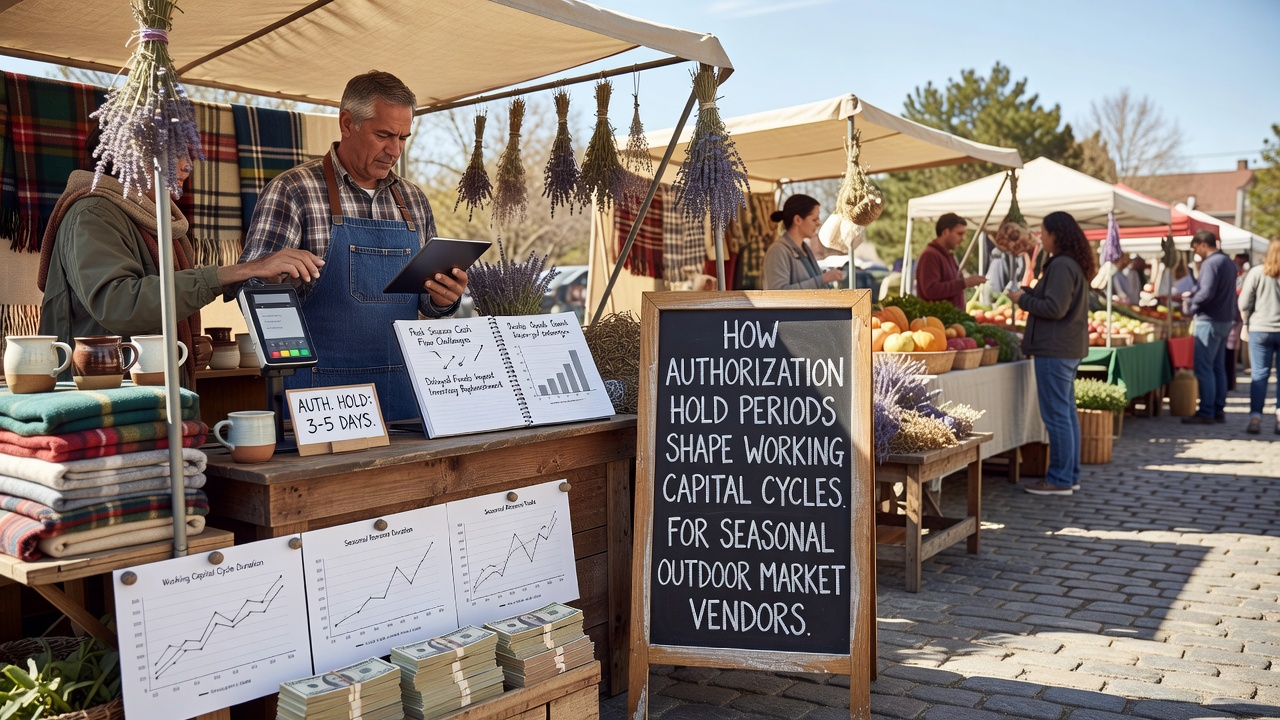
How Authorization Hold Periods Shape Working Capital Cycles for Seasonal Outdoor Market Vendors
Authorization hold periods create temporary blocks on card transaction funds that can last from 24 hours to several business days depending on processor policies and risk assessments. Seasonal outdoor market vendors rely on quick access to revenue for restocking perishable goods, paying stall fees, and covering transportation costs during short selling windows that often span only weekends or specific months. These holds directly interrupt cash availability even though sales have occurred and customers have completed purchases.
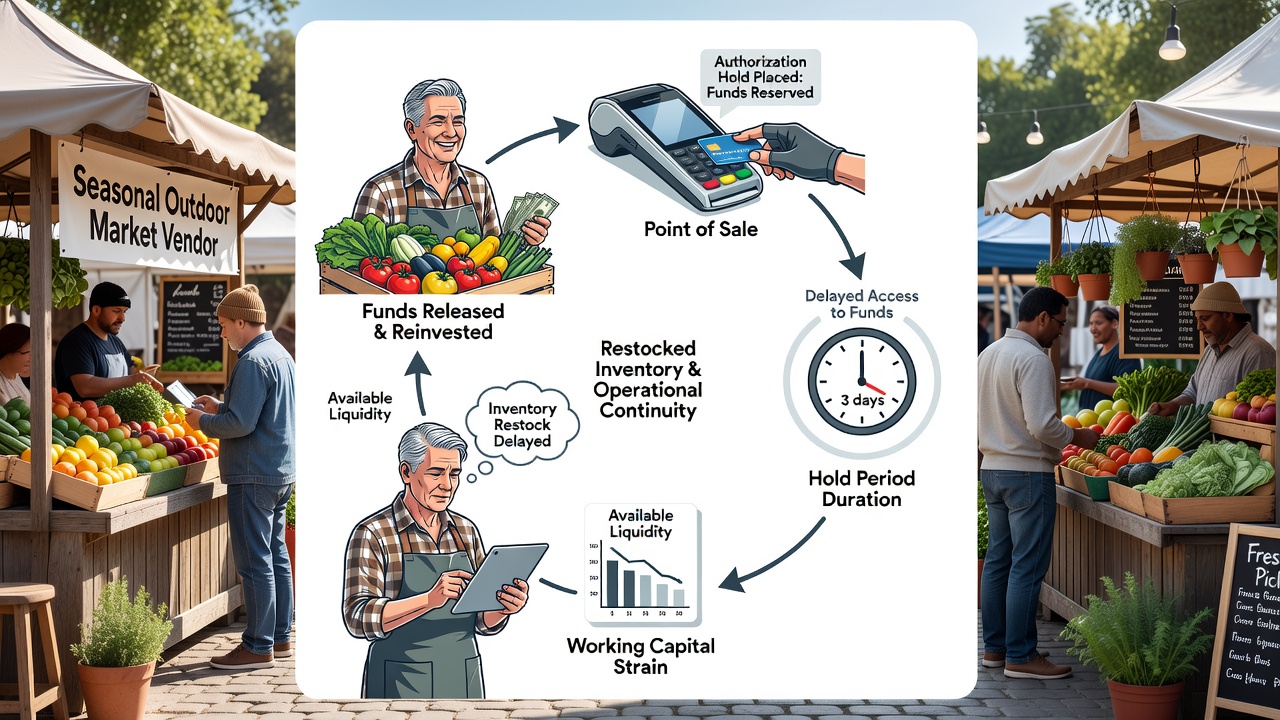
Data from payment networks shows average authorization hold durations extending to three days for vendors classified under higher-risk merchant category codes that include temporary event locations. Researchers at institutions tracking small business finance note that outdoor market operators experience amplified effects because their revenue arrives in concentrated bursts rather than steady daily streams. When holds coincide with peak market days, vendors face gaps between incoming sales and usable balances that force adjustments in ordering patterns or reliance on alternative financing.
Mechanics of Authorization Holds in Temporary Retail Settings
Payment processors place authorization holds to verify transaction legitimacy and guard against chargebacks before final settlement occurs. For vendors operating from pop-up tents or mobile carts, terminals often connect through mobile networks that trigger additional verification layers compared with fixed-location merchants. Industry reports indicate settlement timelines stretch further when transactions occur outside standard business hours or in areas with variable connectivity, situations common at evening farmers markets or weekend craft fairs.
Those who study merchant services observe that holds frequently apply to the full authorized amount even when only a portion represents the actual purchase total, particularly for vendors accepting tips or variable pricing on produce and handmade items. This practice reduces available working capital during the critical restocking phase that follows high-volume market days. Figures from banking analyses reveal that seasonal operators without established merchant histories encounter longer hold windows, sometimes reaching five days, compared with year-round retailers.
Effects on Inventory and Cash Flow Timing
Working capital cycles for these vendors depend on rapid turnover where revenue from Saturday sales funds Monday supplier deliveries. Extended authorization holds break this sequence because cleared funds may not arrive until midweek, after orders have already been placed or missed. Observers note that vendors selling time-sensitive items such as cut flowers or fresh seafood face spoilage risks when delayed access forces smaller or delayed purchases from wholesalers.
Studies of regional market networks indicate that hold periods also influence vendor participation decisions, with some operators choosing cash-only models during peak seasons to bypass delays entirely. Yet card acceptance remains essential for capturing higher average transaction values, creating a trade-off that shapes overall revenue patterns. In July 2026, updated processor guidelines from several major networks introduced faster micro-settlement options for vendors meeting volume thresholds, though adoption among temporary outdoor setups has progressed gradually due to onboarding requirements.
Seasonal Patterns and Regional Variations
Market calendars create predictable pressure points where authorization delays compound existing cash constraints. Spring and fall shoulder seasons feature fewer operating days, so any extension in fund availability hits harder than during summer peaks when multiple market opportunities overlap. Canadian payment studies highlight similar dynamics in northern regions where shorter growing seasons compress vendor cycles further, prompting some to seek bridge financing during transition months.
European Central Bank data on small merchant payments shows that cross-border card transactions at outdoor events trigger additional compliance checks that extend hold durations beyond domestic averages. Vendors sourcing specialty goods from multiple suppliers encounter layered timing mismatches when one processor releases funds days after another, disrupting coordinated inventory replenishment across product categories.
Processor Policies and Mitigation Approaches
Many acquiring banks offer expedited settlement programs that reduce standard hold periods for merchants demonstrating consistent transaction patterns and lower dispute rates. Seasonal vendors who maintain records across multiple market seasons qualify more readily for these programs, according to analyses from the Federal Reserve Bank of New York. Yet qualification often requires minimum monthly volumes that newer or part-time operators struggle to meet during initial seasons.
Alternative payment structures such as instant payout features now appear in some mobile terminal offerings, though these typically carry per-transaction fees that reduce net margins. Research from academic sources tracking merchant adoption indicates that vendors who combine multiple processors can route transactions selectively to minimize average hold times, though integration complexity rises with each additional connection. Those managing multiple seasonal locations report success when they align processor choices with specific market schedules rather than applying uniform setups across all events.
Conclusion
Authorization hold periods intersect with the compressed timelines and burst revenue patterns that define seasonal outdoor market operations. The resulting constraints on working capital influence inventory decisions, supplier relationships, and even participation levels across different market calendars. As processing networks continue refining settlement speeds and qualification criteria, vendors who track hold durations alongside sales data gain clearer visibility into actual cash availability windows. These mechanics remain central to understanding cash flow management for any operator whose business model centers on temporary, high-intensity selling environments.