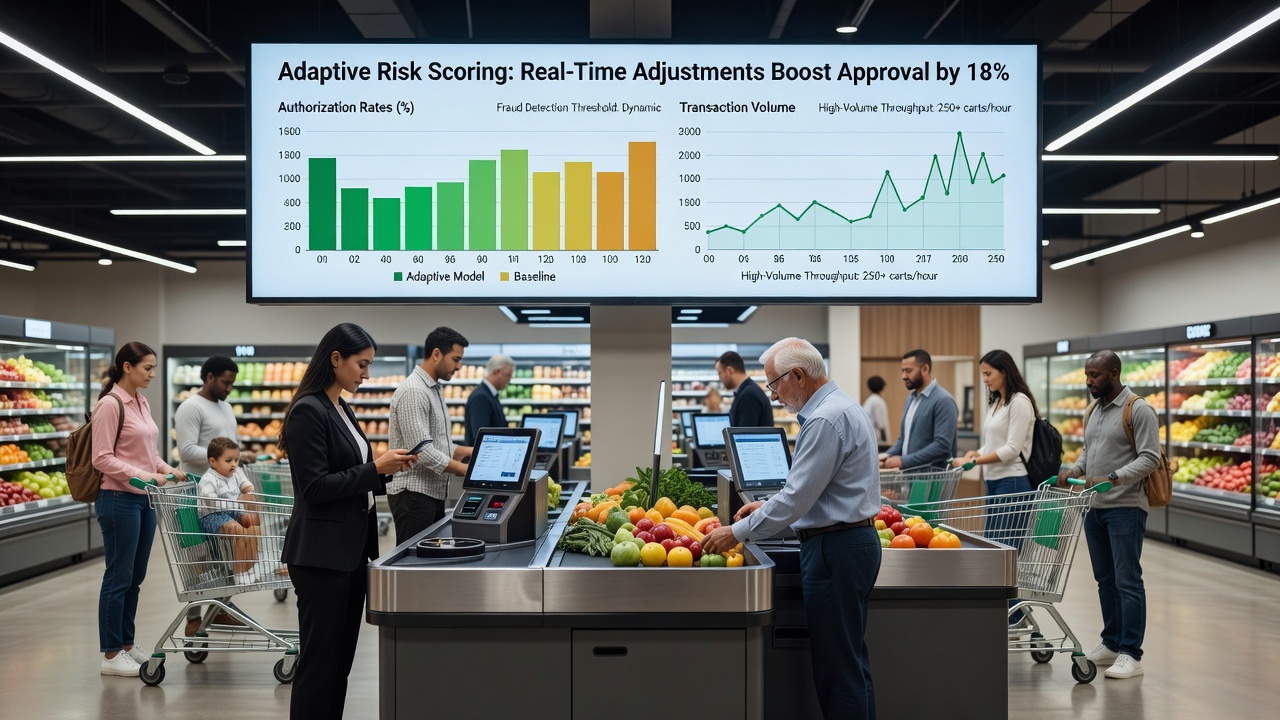
How Adaptive Risk Scoring Models Influence Authorization Rates in High-Volume Grocery Checkout Systems
Adaptive risk scoring models evaluate each transaction using machine learning algorithms that analyze dozens of variables simultaneously, including purchase amount, time of day, customer history, device fingerprinting, and geographic patterns, and these systems adjust approval thresholds dynamically rather than relying on static rules that either block too many legitimate sales or allow excess fraud through. Grocery environments generate thousands of low-value, high-frequency transactions each hour, so the models must process decisions in under 200 milliseconds while maintaining accuracy rates above 98 percent across peak periods such as weekend mornings and holiday rushes.
Core Mechanics of Adaptive Scoring in Retail Payments
Retailers integrate these models into their payment gateways where incoming card data triggers an immediate risk calculation that combines supervised learning from historical fraud cases with unsupervised anomaly detection on live traffic, and the resulting score determines whether the transaction routes straight to authorization, triggers additional verification steps, or declines outright. In high-volume grocery settings the emphasis sits on minimizing false positives because each declined legitimate purchase can translate into lost basket revenue and customer friction at the register. Data from the Federal Reserve's 2025 payments study indicates that chains deploying adaptive models saw authorization rates climb between 1.8 and 3.4 percentage points within the first six months of implementation, while fraud losses remained flat or declined slightly.
Because grocery baskets often contain similar staple items, the models learn seasonal and regional buying signatures quickly, and this allows them to treat a $87 cart of milk, bread, and produce differently from an atypical $87 electronics purchase at the same store. Velocity checks run in parallel, flagging accounts that exceed typical daily transaction counts without blocking the entire queue, and location-based signals compare the card's registered address against the store's GPS coordinates to surface higher-risk cross-region attempts.
Effects on Authorization Rates During Peak Hours
High-volume periods expose the trade-offs most clearly because network latency and processor queues grow, yet adaptive models actually improve approval consistency by shifting risk weights in real time. When transaction volume spikes above baseline by 40 percent or more, the systems automatically relax certain low-impact rules while tightening others tied to known fraud vectors, and this recalibration occurs without manual intervention from store staff. Observers at major North American chains report that checkout abandonment due to payment declines dropped measurably after rollout, particularly during evening rushes when staffing levels remain constant but customer impatience rises.
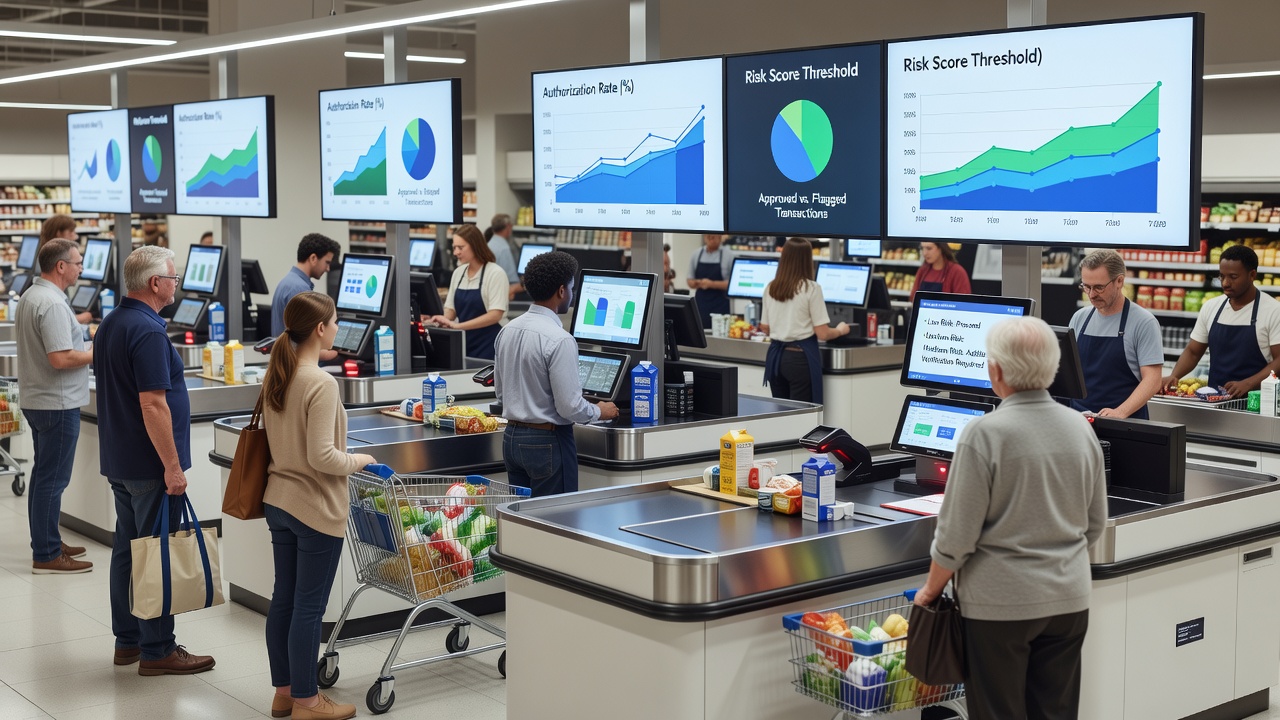
European grocery operators using similar frameworks documented parallel gains, with the European Central Bank noting in its 2025 retail payments overview that adaptive scoring contributed to steadier authorization performance across euro-area supermarkets even as contactless volumes continued climbing. The models also incorporate issuer-side feedback loops so that declines from specific banks feed back into future scoring weights, creating a self-correcting mechanism that becomes more precise with each additional transaction cycle.
Integration with Existing Payment Infrastructure
Most grocery point-of-sale platforms already connect to multiple acquirers and networks, and adaptive scoring sits as an orchestration layer that decides routing based on both risk score and expected approval probability for each processor. This dual optimization reduces the chance that a marginally risky transaction reaches an issuer with stricter internal policies while still protecting against systematic fraud attempts. In June 2026 several regional chains completed upgrades that embedded these models deeper into their inventory-linked payment flows, allowing the system to cross-reference item-level data such as high-value gift cards or alcohol purchases against customer profiles before the tender step completes.
Tokenization works alongside the scoring engine so that stored card credentials never expose full PANs during the risk assessment, and this combination satisfies both security requirements and speed demands at scale. When a returning customer uses a previously tokenized card, the model references prior successful transactions at that same location to lower the effective risk score without additional prompts, and the result appears as faster lane throughput rather than noticeable changes to the customer experience.
Measurement and Ongoing Calibration
Operators track authorization rate, fraud rate, and chargeback ratio as primary KPIs, and they recalibrate model parameters weekly using aggregated anonymized data from all stores in a region. Because grocery margins remain thin, even a 0.5 percent improvement in net approved transactions can produce meaningful revenue lift over a fiscal quarter, and this incentive drives continuous investment in feature engineering that incorporates new signals such as loyalty program activity or weather-related purchase shifts. Research teams at institutions including the Reserve Bank of Australia have published analyses showing that grocery retailers achieve the strongest results when adaptive scoring combines card-present signals with limited card-not-present data from online ordering integrations.
Conclusion
Adaptive risk scoring models therefore function as precision instruments that balance fraud defense against revenue capture in environments where transaction speed and volume leave little room for error, and their continued refinement through real-time feedback and multi-source data integration supports steadier authorization performance across high-volume grocery operations worldwide.