Dissecting Timing Discrepancies Between Customer Charges and Merchant Deposits in Event-Based Ticketing Platforms for Community Festivals
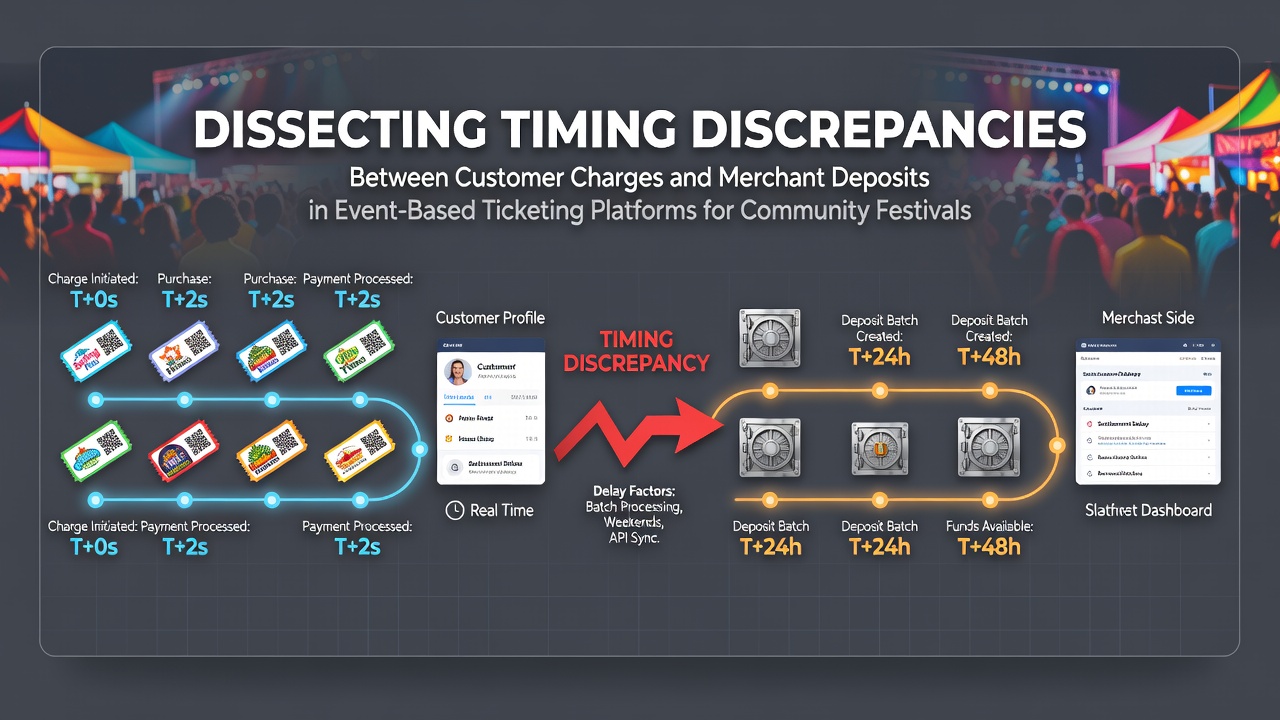
Community festivals rely on event-based ticketing platforms to manage ticket sales, yet observers frequently note gaps between the moment customers see charges on their statements and the time organizers receive funds in their accounts. These timing discrepancies arise from layered settlement processes that platforms, banks, and payment processors coordinate across multiple days or even weeks. Data from payment networks shows that while customer accounts debit instantly at purchase, merchant deposits often follow batch cycles that align with banking hours and risk review windows. Platforms process charges through authorization holds that confirm funds availability, followed by capture steps that move money into processor accounts. Community festival organizers, however, encounter delays because many platforms batch settlements daily or weekly, especially during high-volume periods like summer events. Research from the Federal Reserve indicates average ACH settlement times range from one to three business days, creating visible gaps when customers buy tickets weeks ahead of the festival date.
Payment Flow Mechanics in Ticketing Systems
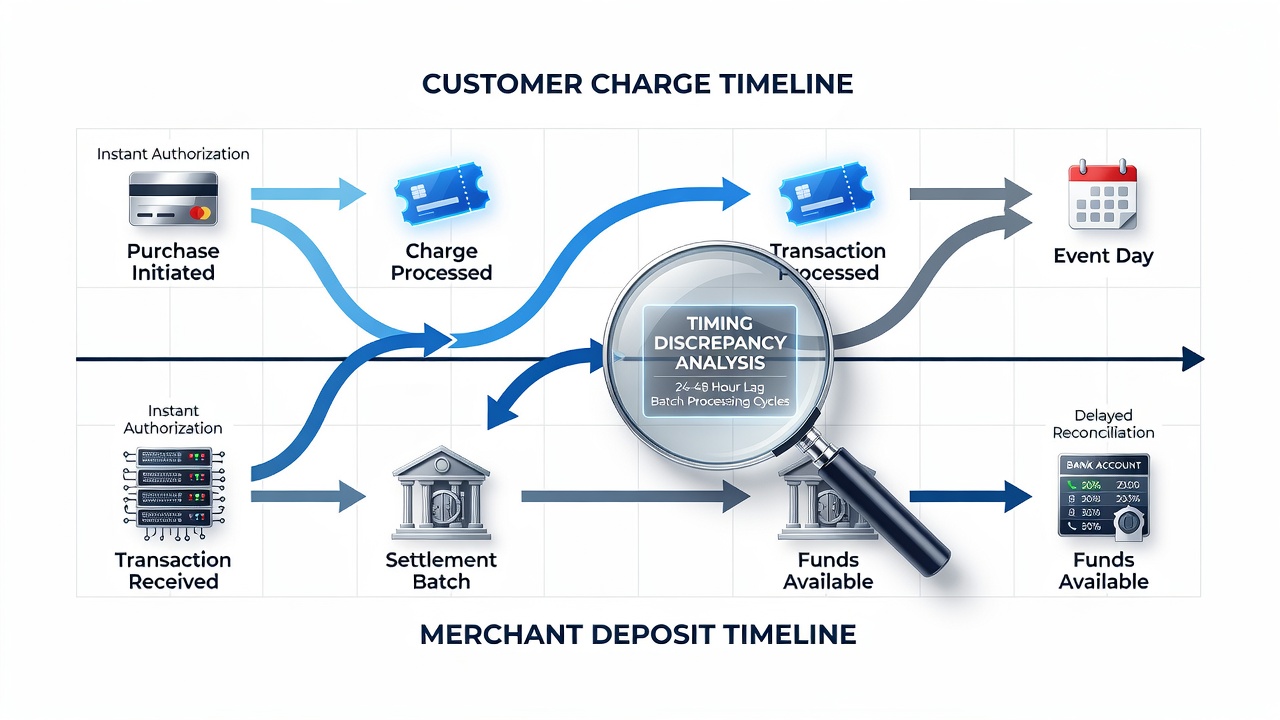
Ticketing platforms capture customer details at checkout and route transactions through gateways that connect to card networks or alternative methods. Once authorization succeeds, funds sit in a processor-controlled account until the platform initiates a payout to the merchant. Observers note that this intermediate holding period allows platforms to deduct service fees, apply fraud filters, and reconcile refunds before releasing net amounts to festival accounts. Event organizers for community festivals often select platforms that promise next-day deposits, yet actual timing varies based on the merchant's risk profile and transaction volume. High-volume festivals trigger additional review layers because processors monitor for chargeback patterns common in seasonal events. Studies from payment industry reports reveal that platforms serving festivals with under 500 attendees experience shorter average deposit delays than those handling larger gatherings where transaction counts spike.
Factors Driving Timing Gaps
Several operational elements combine to stretch the interval between charge and deposit. Batch processing remains the dominant method for most platforms because it reduces per-transaction costs compared with real-time rails. While instant payment schemes expand in regions such as the Eurozone, many community festival organizers in North America still operate under legacy ACH frameworks that settle on fixed schedules. Risk scoring models add another variable. Platforms apply dynamic thresholds that hold funds longer when ticket sales occur through new accounts or during promotional surges. According to Bank of Canada analyses of retail payment flows, seasonal spikes around August events correlate with extended hold periods as processors adjust for elevated fraud signals. Festival organizers also encounter weekend and holiday delays because banking systems pause batch runs on non-business days. Refund and dispute windows further influence timing. Platforms typically withhold portions of deposits until the standard chargeback period expires, which can stretch thirty days or more after the event concludes. This practice protects organizers from sudden reversals but extends the cash flow gap that community groups must bridge through reserves or bridge financing.
Regional Variations and Platform Practices
Geographic differences shape how quickly funds reach festival accounts. European platforms increasingly leverage SEPA Instant Credit Transfer rails that move money in seconds, yet adoption among smaller community events remains uneven because setup costs and regulatory requirements deter some organizers. In contrast, Australian and Canadian systems show gradual shifts toward faster rails, with data indicating settlement improvements of up to forty percent in pilot programs. Platform choice directly affects outcomes. Some providers offer same-day deposits for an additional fee, while others embed automatic holds that release only after ticket validation or event completion. Those who manage multiple festivals report that switching processors mid-season often requires re-verification steps that temporarily widen timing discrepancies before new workflows stabilize.
Effects on Community Festival Operations
Cash flow timing influences how organizers allocate budgets for vendors, security, and marketing. When deposits lag behind customer charges by several days, groups may delay supplier payments or seek short-term credit lines. Industry surveys reveal that festivals with tighter margins experience the greatest strain because they lack substantial operating reserves to cover the interval. Suppliers notice downstream effects when organizers request extended payment terms to match their own deposit schedules. This creates ripple patterns across local economies that support community events. Platforms have introduced reporting dashboards that display expected deposit dates, allowing organizers to plan more accurately, yet these tools still depend on accurate input from underlying banking partners.
Conclusion
Timing discrepancies between customer charges and merchant deposits stem from established payment infrastructure rather than platform errors alone. As instant payment options expand and regulatory bodies encourage faster settlement, community festival organizers gain more visibility into when funds will arrive. Current patterns suggest gradual convergence toward shorter gaps, particularly for events scheduled after August 2026 when additional real-time rails reach broader adoption across North American and European markets.