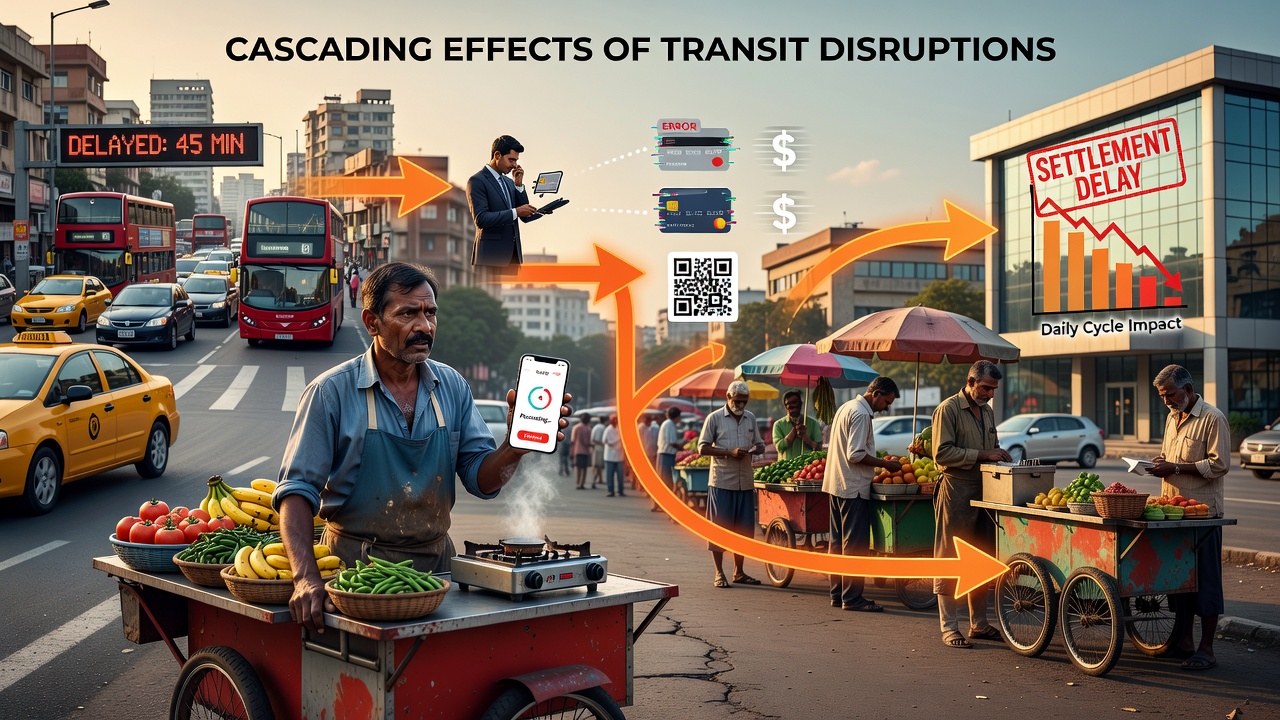
Cascading Effects of Transit Disruptions on Daily Settlement Cycles Within Urban Street Vendor Payment Frameworks
Transit disruptions ripple through urban economies in ways that extend far beyond commuter delays, and street vendors experience these effects directly in their payment collection and settlement routines. Cities rely on buses, trains, and road networks to move both people and goods, so when those systems falter vendors face altered foot traffic, delayed cash pickups, and interrupted digital transaction flows that push settlement cycles off schedule.
How Transit Interruptions Alter Vendor Operations
Street vendors typically operate on tight daily cycles where morning collections feed afternoon deposits and evening reconciliations close the books. A single rail line closure or major bus rerouting can shift customer arrival patterns by hours, which changes the timing of card swipes, mobile wallet taps, and cash exchanges. Researchers tracking vendor activity in dense commercial corridors note that these timing shifts compound quickly because most vendors lack buffer storage for unsold inventory or excess working capital to cover extended gaps between sales and bank credits.
Data from municipal transport agencies shows that even brief signal failures or construction-related lane reductions extend average commute times by 25 to 40 minutes during peak periods. Vendors positioned near transit hubs report corresponding drops in midday transactions followed by rushed evening surges that overload point-of-sale devices and create batch-upload backlogs at close of business.
Payment Collection Points and Settlement Timelines
Many urban vendors now accept both cash and contactless payments through smartphone-based terminals. Cash still requires physical transport to banks or agents for deposit, while digital transactions travel through acquirer networks that settle once or twice daily. When transit slows, couriers carrying cash reach deposit points later, and terminal batches may queue behind network congestion caused by increased mobile data usage during rerouted commutes. Settlement files that normally clear by midnight can slip into the next banking day, delaying vendor access to funds for restocking.
Observed Patterns in Multiple Cities
Observers tracking vendor networks in North American and Asian cities have documented consistent sequences during major service interruptions. A 2024 analysis by the Texas A&M Transportation Institute linked extended rail outages to measurable increases in next-day settlement failures among micro-merchants clustered around affected stations. Similar patterns appear in reports from Singapore's Land Transport Authority, where bus diversions during infrastructure upgrades produced parallel delays in vendor cash deposits at neighborhood banks.
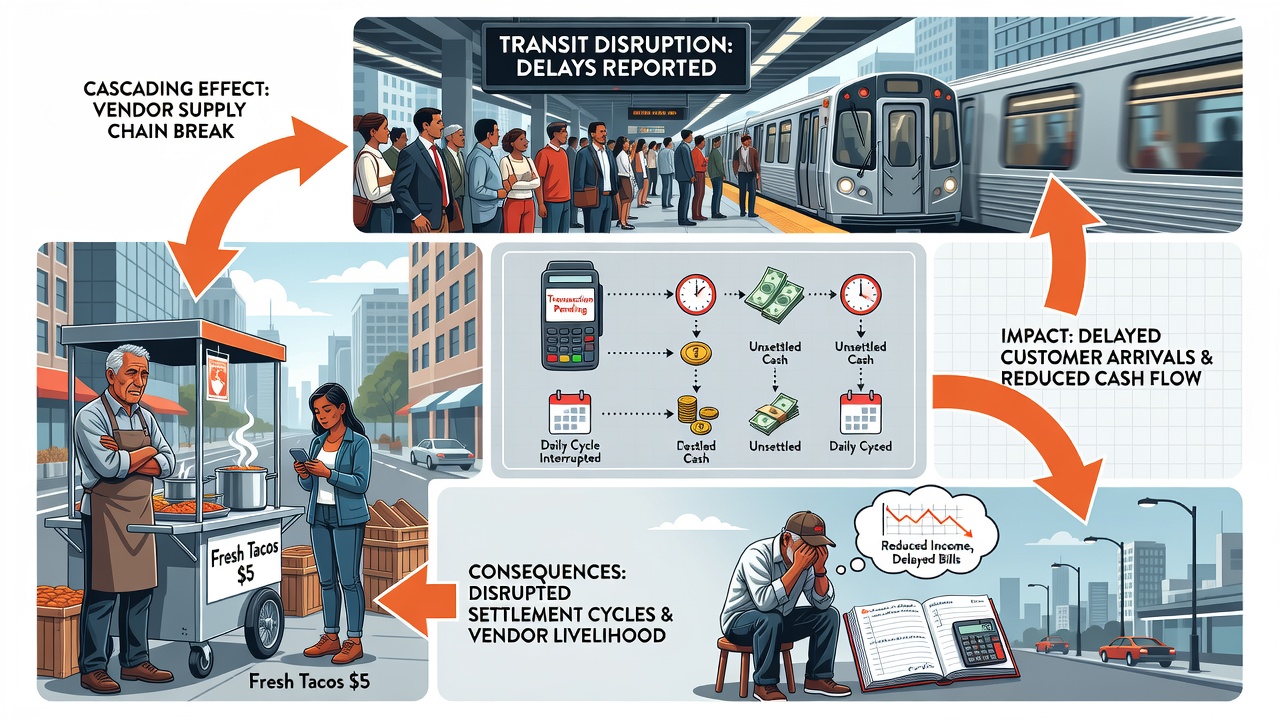
Vendors who rely on third-party collection services face an added layer because those services schedule routes around normal transit timetables. When those timetables collapse, pickup windows shift or get missed entirely, leaving cash on site overnight and increasing both security exposure and reconciliation mismatches the following morning.
Cascading Settlement Effects
One delayed deposit often triggers downstream adjustments. Banks apply standard cutoff times for same-day crediting, so late arrivals roll into the next cycle and vendors must adjust supplier payments accordingly. Suppliers who expect daily transfers may withhold restock deliveries or impose short-term surcharges when funds arrive late. Over successive disruption days these adjustments accumulate, stretching working-capital cycles from 24 hours to 48 or 72 hours and forcing vendors to reduce inventory variety or operating hours.
Digital settlement chains introduce their own friction points. Acquirers process batches in set windows, and network congestion during widespread rerouting can push authorization queues past those windows. The result is a deferred settlement file that vendors cannot access until the following business day, even if the original transactions occurred before the usual cutoff.
July 2026 Projections and Ongoing Monitoring
Transport planners preparing for summer 2026 maintenance cycles anticipate continued pressure on settlement timing because several major cities have scheduled simultaneous track renewals and bus corridor upgrades. Monitoring programs operated by regional transport authorities will track vendor settlement data alongside ridership statistics to quantify how often daily cycles stretch beyond 24 hours. Early indicators suggest that vendors with diversified deposit locations or multiple terminal providers experience fewer multi-day rollovers than those concentrated on single routes.
Conclusion
Transit disruptions therefore transmit effects through both physical movement of cash and digital movement of transaction files, altering the rhythm of urban street vendor settlement cycles in measurable ways. Continued collection of settlement timing data alongside transport performance metrics will help clarify the full scope of these interactions as cities refine maintenance schedules and vendors adapt collection practices.